

Account-Based Marketing: How to Target High-Value B2B Accounts
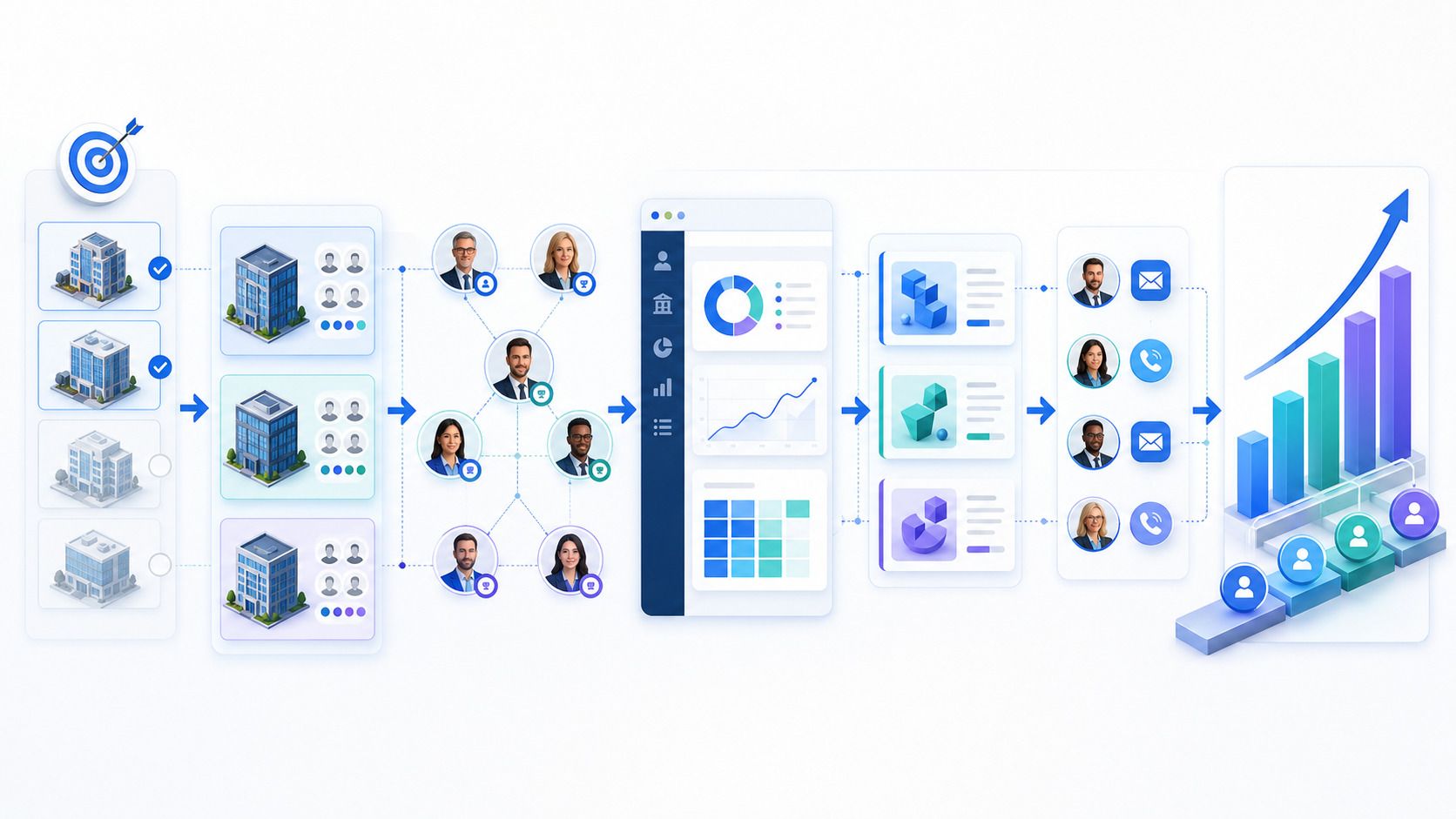
B2B marketing becomes more effective when the focus shifts from chasing every lead to targeting the right accounts.
Not every company is a good fit for your service. Some leads may have low budgets. Some may not need your solution. Some may not match your industry, location, or decision-making process.
Account-based marketing helps solve this problem.
Instead of marketing to a broad audience, ABM focuses on specific high-value companies. The goal is to identify the accounts that matter most, understand their needs, and reach key decision-makers with relevant messages.
For B2B brands with longer sales cycles and higher deal values, this approach can improve lead quality, sales efficiency, and revenue potential.
What Is Account-Based Marketing?
Account-based marketing, or ABM, is a B2B marketing strategy that targets selected companies instead of a wide audience.
In a normal lead generation campaign, the goal is to attract many leads and then qualify them. In ABM, the process starts with identifying the right accounts first.
Once the target account list is ready, marketing and sales teams work together to engage decision-makers inside those companies.
ABM may include LinkedIn campaigns, personalized landing pages, email outreach, content marketing, retargeting, webinars, direct sales follow-up, and CRM-based nurturing.
The focus is simple. Win the accounts that are most valuable to your business.
Why ABM Works for B2B Brands
B2B buying decisions are rarely made by one person.
A company may involve founders, department heads, finance teams, technical teams, procurement teams, and senior leaders before choosing a vendor. ABM helps you reach these different stakeholders with messages that match their role and concern.
This makes the strategy more precise.
Instead of spending budget on broad campaigns, ABM helps businesses invest in accounts with stronger revenue potential.
It is especially useful for high-ticket services, SaaS companies, enterprise solutions, consulting firms, IT services, manufacturing suppliers, and professional service companies.
Start With Your Ideal Customer Profile
A strong ABM strategy begins with a clear ideal customer profile.
This profile defines the type of company you want to target. Without this clarity, the target account list may become too broad or irrelevant.
Your ideal customer profile should include:
• Industry
• Company size
• Revenue range
• Location
• Technology used
• Growth stage
• Common pain points
• Buying triggers
• Decision-making structure
• Deal value potential
For example, a company offering Digital Marketing Services in Boston may target funded SaaS brands, B2B service companies, healthcare businesses, or enterprise firms that need stronger lead generation, SEO visibility, and paid campaign performance.
Build a Target Account List
After defining your ideal customer profile, create a list of high-value accounts.
This list should include companies that match your business goals and have a strong chance of needing your service.
You can build this list using:
• CRM data
• Website visitor data
• LinkedIn Sales Navigator
• Industry directories
• Event attendee lists
• Existing customer patterns
• Competitor customer research
• Intent data platforms
• Sales team insights
Do not make the list too large at the start. A focused list of strong-fit accounts is usually better than a large list with weak relevance.
Quality matters more than volume in ABM.
Identify the Buying Committee
In ABM, you are not targeting only one person. You are targeting the buying committee.
Different people inside the same company may influence the decision.
For example:
CEO or Founder
They care about growth, revenue, efficiency, and long-term value.
Marketing Head
They care about lead quality, campaign performance, brand visibility, and reporting.
Sales Head
They care about pipeline quality, conversion rates, and sales-ready leads.
Finance Team
They care about cost, ROI, and budget justification.
Technical Team
They care about process, tools, integration, and reliability.
ABM works better when your messaging speaks to each role clearly.
Personalize Your Messaging
Personalization is the heart of account-based marketing.
This does not mean adding a company name to an email and calling it personalized. Real personalization shows that you understand the account’s business, market, challenges, and goals.
For example, your message can refer to:
• Their industry challenges
• Their growth stage
• Their location
• Their product category
• Their competitor landscape
• Their recent expansion
• Their hiring activity
• Their website gaps
• Their campaign opportunities
Personalized messaging feels more relevant and gets better attention.

Use Content to Support Each Stage
ABM needs strong content because high-value accounts require more trust before conversion.
Different content should support different stages of the account journey.
Awareness Content
Use blogs, LinkedIn posts, short videos, and industry insights to introduce problems and opportunities.
Consideration Content
Use case studies, comparison guides, webinars, service explainers, and performance reports to build confidence.
Decision Content
Use audits, proposals, demos, ROI projections, testimonials, and consultation offers to support final discussions.
The right content helps decision-makers understand value without forcing a sales conversation too early.
Use LinkedIn for ABM Campaigns
LinkedIn is one of the most useful platforms for account-based marketing.
It allows businesses to target people by company, job title, seniority, industry, and professional role. This makes it easier to reach decision-makers inside selected accounts.
LinkedIn ABM campaigns can promote:
• Thought leadership content
• Case studies
• Webinars
• Industry reports
• Consultation offers
• Product demos
• Service-specific landing pages
Founder-led content and employee advocacy can also support ABM. When key people from your company share useful insights, target accounts may begin to notice your brand more naturally.
Create Account-Specific Landing Pages
A generic landing page may not work well for high-value accounts.
ABM landing pages should feel more relevant to the target audience. They can be personalized by industry, company type, pain point, or service need.
For example, instead of one broad “digital marketing services” page, you may create pages for:
• SaaS lead generation
• Healthcare digital marketing
• B2B performance marketing
• Enterprise SEO services
• Local market growth campaigns
These pages should include relevant pain points, proof points, service benefits, case studies, and a clear CTA.
When the page matches the account’s need, conversion chances improve.
Align Sales and Marketing Teams
ABM only works when marketing and sales are closely aligned.
Marketing helps identify, engage, and nurture accounts. Sales helps provide account insights, outreach, follow-up, and relationship building.
Both teams should agree on:
• Target account list
• Account priority levels
• Decision-maker roles
• Outreach messages
• Content needs
• Follow-up timing
• Lead scoring rules
• CRM updates
• Success metrics
Without alignment, ABM becomes disconnected. Marketing may attract attention, but sales may not follow up properly. Or sales may pursue accounts that marketing has not warmed up.
The strongest ABM strategies work as one shared system.
Use Retargeting to Stay Visible
High-value accounts may not convert quickly.
They may visit your website, read a blog, view a case study, and leave without contacting you. Retargeting helps keep your brand visible during this decision window.
You can retarget account visitors with:
• Case study ads
• Testimonial ads
• Webinar invites
• Service explainers
• Industry-specific offers
• Consultation CTAs
Retargeting works well because it keeps your brand present while the buying committee continues research and discussion.
Track Engagement at the Account Level
ABM success should not be measured only by lead volume.
You need to track how target accounts are engaging with your brand.
Important ABM metrics include:
• Target account website visits
• Content downloads
• LinkedIn ad engagement
• Email response rates
• Meeting bookings
• Sales conversations
• Pipeline value
• Deal progression
• Account conversion rate
• Revenue from target accounts
These metrics show whether the right companies are moving closer to conversion.
Common ABM Mistakes to Avoid
Many B2B brands try ABM but treat it like normal lead generation.
This reduces results.
Common mistakes include:
• Targeting too many accounts at once
• Using generic messaging
• Not involving sales early
• Ignoring decision-maker differences
• Sending all traffic to one broad page
• Tracking only form fills
• Not nurturing accounts long enough
• Creating weak or irrelevant content
ABM needs patience and focus. It is not about quick lead volume. It is about winning better-fit accounts.
Final Thoughts
Account-based marketing helps B2B brands focus on the companies that matter most.
It improves targeting, personalization, sales alignment, content relevance, and long-term pipeline quality. Instead of spending budget on broad audiences, ABM helps teams build relationships with high-value accounts that have stronger revenue potential.
For businesses with complex sales cycles, ABM can create better conversations and higher-quality opportunities.
The best results come from a clear ideal customer profile, a focused account list, personalized campaigns, strong content, LinkedIn targeting, retargeting, and close sales follow-up.
When ABM is planned well, marketing becomes more precise, sales becomes more focused, and growth becomes more strategic.
"“Account-based marketing works because it focuses time, budget, and messaging on the companies most likely to become valuable customers.”"