

B2B Digital Marketing Strategy for Long Sales Cycles
Most people do not convert the first time they see an ad. They may visit your website, check your service page, watch a video, read a few reviews, and leave without taking action.
That does not always mean they are not interested. They may need more time, more proof, or a stronger reason to return.
This is where retargeting helps.
Retargeting in paid social advertising allows businesses to reach people who have already interacted with their brand. These users are warmer than cold audiences because they have shown some level of interest. When the right message reaches them again, they are more likely to convert.
What Is Retargeting in Paid Social Advertising?
Retargeting is a paid advertising strategy that shows ads to people who have already engaged with your business online.
This may include users who:
• Visited your website
• Viewed a service page
• Clicked an ad
• Watched a video
• Opened a lead form
• Engaged with your Instagram or Facebook page
• Added a product to cart
• Downloaded a resource
• Started an enquiry but did not submit it
Platforms like Meta, LinkedIn, YouTube, and other paid social channels allow businesses to build custom audiences from these actions.
The goal is to bring interested users back and guide them toward conversion.
Why First-Time Visitors Often Do Not Convert
People rarely make decisions immediately.
A user may click your ad during a work break, while scrolling at night, or while casually comparing options. Even if they are interested, they may not be ready to fill out a form or book a call.
They may also leave because:
• They want to compare other providers
• They need approval from a team member
• They are checking pricing
• They do not fully trust the brand yet
• They are distracted
• The offer is not urgent enough
• They need more information
Retargeting gives your business a second chance to continue the conversation.
How Retargeting Improves Conversions
Retargeting improves conversions because it focuses on people who already know your brand.
Cold audiences need more education. Warm audiences need the right nudge.
A user who visited your landing page has already shown interest. A user who watched 75% of your video has spent time with your message. A user who opened your lead form may only need a stronger reason to complete it.
Retargeting helps by showing these users more relevant ads based on their previous actions.
For example, a Digital Marketing Company in Austin can retarget website visitors with case studies, client results, service benefits, or a free consultation offer to move them closer to enquiry.
Retargeting Reduces Wasted Ad Spend
Cold advertising often reaches a wide audience. Some users may be relevant. Many may not be ready.
Retargeting narrows the focus.
Instead of spending the full budget on people who have never heard of your business, retargeting puts part of the budget toward users who already showed interest.
This can improve ad efficiency because warmer users are more likely to click, engage, and convert.
Retargeting does not replace cold campaigns. It supports them by improving conversion from traffic you have already paid to attract.
It Builds Trust Through Repeated Exposure
Trust usually grows over multiple touchpoints.
A person may first see your brand through a social ad. Later, they may visit your website. Then they may see a testimonial ad, followed by a case study or offer.
This repeated exposure helps the brand feel more familiar.
But repetition must be useful. Showing the same ad again and again can create fatigue. Retargeting works better when each ad adds something new.
For example:
• First ad: Service awareness
• Second ad: Problem and solution
• Third ad: Client proof
• Fourth ad: Consultation offer
This sequence feels more natural and helps users make a decision.
Retargeting Helps Recover Abandoned Leads
Many users start an action but do not complete it.
They may open a lead form and close it. They may visit the contact page but not submit details. They may click the call button but not connect.
These users are valuable because they came close to converting.
Retargeting can bring them back with a stronger message.
For example:
• “Still looking for a growth partner?”
• “Book your free campaign audit.”
• “See how our team improves lead quality.”
• “Ready to turn ad traffic into enquiries?”
A clear reminder can push warm prospects to take the next step.
Audience Segmentation Makes Retargeting Stronger
Not all retargeting audiences are the same.
A person who watched a short video is different from someone who visited a pricing page. A person who read a blog is different from someone who opened a lead form.
Better segmentation creates better messaging.
Useful retargeting segments include:
• Website visitors from the last 30 days
• Service page visitors
• Landing page visitors
• Blog readers
• Video viewers
• Social media engagers
• Lead form openers
• Cart abandoners
• Past customers
• Email list audiences
Each group should receive a message that matches their stage in the journey.

B2B Digital Marketing Strategy for Long Sales Cycles
B2B buying rarely happens quickly. A prospect may discover your brand today and make a decision weeks or months later.
This is normal for high-value services, SaaS products, consulting, technology solutions, industrial services, and enterprise partnerships. Multiple people may be involved. Budgets need approval. Risks are reviewed. Vendors are compared carefully.
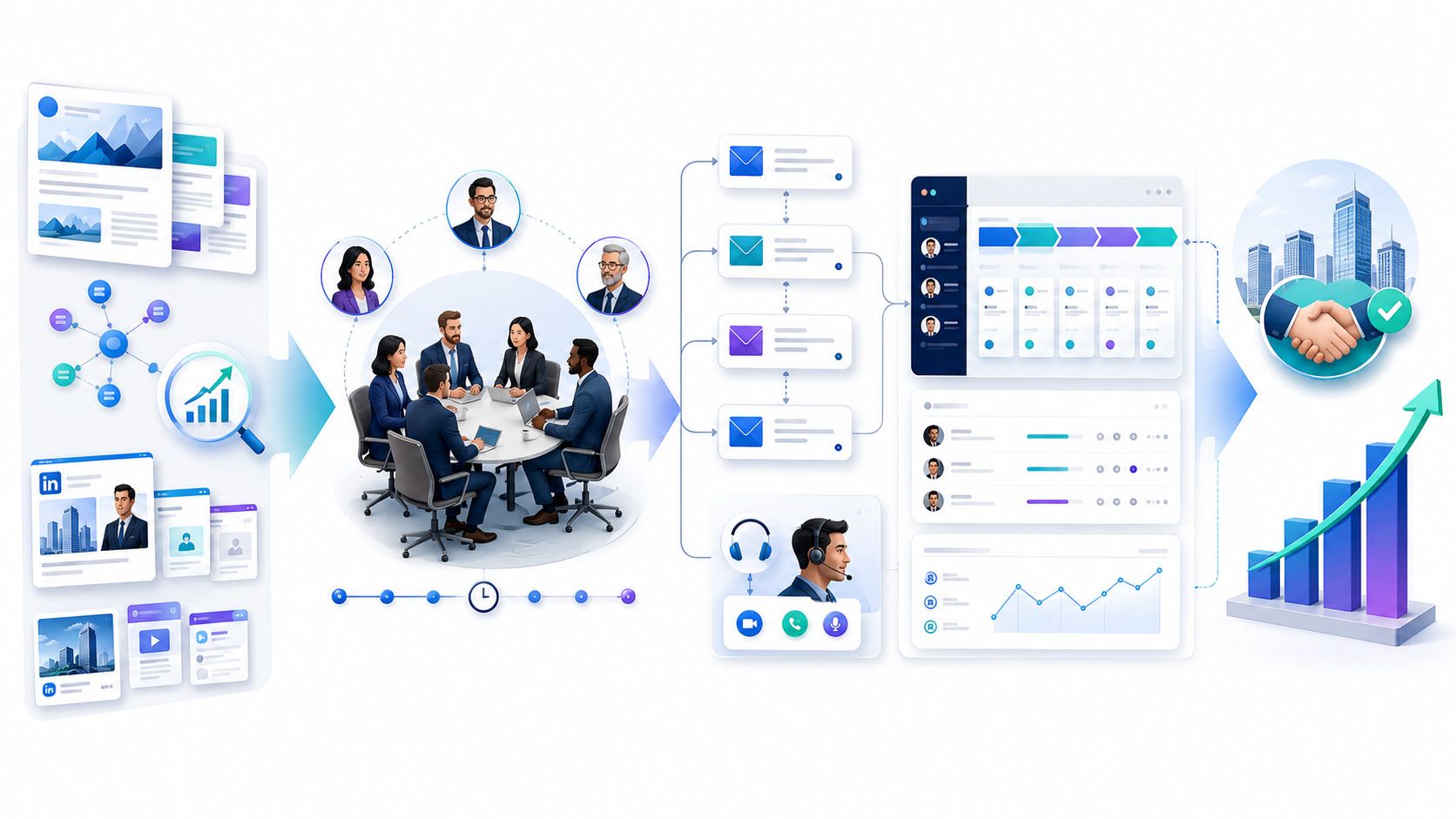
That is why B2B digital marketing cannot depend only on one ad, one landing page, or one sales call. It needs a complete strategy that supports prospects through every stage of the sales cycle.
Why B2B Sales Cycles Take Longer
B2B decisions involve more risk than simple consumer purchases.
The buyer is not only spending money. They are choosing a solution that may affect operations, revenue, customer experience, or team productivity.
A long sales cycle may happen because:
• Multiple decision-makers are involved
• The investment value is high
• The solution needs technical review
• Buyers compare many vendors
• Internal approvals take time
• ROI needs to be justified
• Trust must be built before commitment
This means marketing must keep the brand visible and useful long after the first interaction.
What Makes B2B Digital Marketing Different?
B2B marketing is not only about getting attention. It is about earning confidence.
A business buyer wants clear information, proof of expertise, process clarity, and measurable value. They may read blogs, download resources, attend webinars, compare case studies, check LinkedIn activity, and speak with sales teams before making a choice.
This makes content, SEO, paid campaigns, email nurturing, remarketing, and CRM tracking very important.
A strong B2B strategy gives buyers the right information at the right time.
Start With Clear Buyer Personas
Long sales cycles often include different types of buyers.
There may be a founder, marketing head, finance manager, procurement team, technical evaluator, and final decision-maker. Each person cares about different things.
For example:
• A CEO may care about growth and ROI
• A marketing head may care about campaign performance
• A finance team may care about cost efficiency
• A technical team may care about integration and reliability
• Procurement may care about timelines and vendor credibility
Your digital marketing strategy should speak to these different concerns.
Map Content to the Sales Journey
B2B buyers need different content at different stages.
A prospect at the awareness stage may not be ready for a sales call. They may only want to understand a problem. A decision-stage prospect may need pricing, case studies, demos, or consultation support.
Awareness Stage
At this stage, buyers are identifying the problem. Useful content includes blogs, explainer guides, LinkedIn posts, short videos, and educational resources.
Consideration Stage
Here, buyers compare options. Useful content includes comparison pages, case studies, webinars, checklists, and service explainers.
Decision Stage
At this stage, buyers need confidence. Useful content includes proposals, testimonials, ROI calculators, demos, consultations, and detailed solution pages.
This journey-based approach keeps communication relevant.
Use SEO to Capture Research Demand
B2B buyers search online before speaking to vendors.
They look for problems, solutions, comparisons, pricing factors, and service providers. SEO helps your business appear during this research process.
A company offering Digital Marketing Services in Seattle can build visibility through service pages, blog topics, local SEO pages, case studies, and industry-specific content that answer real buyer questions.
For long sales cycles, SEO is not only about traffic. It helps build familiarity before a sales conversation begins.
Build Authority With Thought-Led Content
B2B buyers want to work with experts.
Thought-led content helps show your understanding of the industry, buyer challenges, and practical solutions. This can include strategy blogs, industry insights, whitepapers, reports, case studies, and expert commentary.
Good content should not sound generic. It should explain problems clearly, share useful perspectives, and help buyers make informed decisions.
When prospects repeatedly find useful content from your brand, trust begins to grow.
Use LinkedIn for Relationship Building
LinkedIn is one of the strongest channels for B2B marketing.
It allows businesses to reach decision-makers, share expertise, promote content, run ads, and build professional credibility.
A good LinkedIn strategy may include:
• Founder-led posts
• Company updates
• Industry insights
• Case study snippets
• Webinar promotions
• Lead magnet campaigns
• Employee advocacy
• Sponsored content
LinkedIn works best when it is used for education and trust-building, not only direct selling.
Paid Ads Should Support the Funnel
Paid ads can help speed up visibility during long sales cycles.
But B2B paid campaigns should not only push demo requests to cold audiences. Many prospects need education first.
A better approach is to use paid ads across funnel stages.
For example:
• Awareness ads promote useful blogs or reports
• Consideration ads promote case studies or webinars
• Decision ads promote consultations or demos
• Retargeting ads bring back website visitors
This keeps your brand present while buyers move through their decision process.
Retargeting Keeps Your Brand Visible
Retargeting is useful for long B2B journeys.
A prospect may visit your service page today and return weeks later. Retargeting helps keep your brand visible during that gap.
You can retarget users who:
• Visited key service pages
• Read specific blogs
• Watched videos
• Downloaded resources
• Opened lead forms
• Engaged with LinkedIn ads
Retargeting works better when the message changes based on user behavior. A blog reader may need more education. A pricing page visitor may need a consultation offer.
Lead Nurturing Is Critical
Not every B2B lead is sales-ready.
Some leads need time, education, and follow-up before they become serious opportunities. Lead nurturing helps maintain communication without forcing an immediate decision.
Email sequences, newsletters, case study follow-ups, webinar invites, and CRM-based reminders can keep prospects engaged.
Useful nurturing content includes:
• Industry insights
• Success stories
• Problem-solving guides
• Service explainers
• ROI-focused content
• Consultation reminders
The goal is to stay helpful until the buyer is ready.
Align Marketing and Sales Teams
B2B marketing cannot work alone.
Sales teams know buyer objections, common questions, budget concerns, and decision triggers. Marketing teams can use this insight to create better content and campaigns.
Both teams should agree on:
• What counts as a qualified lead
• Which industries are priority targets
• What objections need content support
• Which campaigns bring better prospects
• How leads should be followed up
• What CRM data should be tracked
This alignment improves lead quality and conversion rates.
Use CRM and Analytics for Better Decisions
Long sales cycles need proper tracking.
A lead may first come from a blog, return through LinkedIn, click a retargeting ad, and finally submit a form from a service page. Without tracking, the full journey may be missed.
CRM and analytics tools help connect marketing activity with sales outcomes.
Track metrics such as:
• Source of lead
• Content engagement
• Lead quality
• Sales stage
• Follow-up status
• Conversion rate
• Deal value
• Cost per qualified lead
• Customer acquisition cost
This helps businesses understand which channels support real revenue, not just surface-level leads.
Personalization Improves B2B Engagement
B2B buyers respond better when content feels relevant.
Personalization can be based on industry, role, location, company size, or pain point.
For example, a SaaS company may need growth-focused messaging, while a manufacturing company may need efficiency and lead quality messaging.
Personalized landing pages, email sequences, LinkedIn campaigns, and case studies can improve engagement during long sales cycles.
The more relevant the message, the easier it is for buyers to see value.
Common Mistakes in B2B Digital Marketing
Many B2B campaigns fail because they expect fast conversions from complex buyers.
Common mistakes include:
• Sending all traffic to one generic page
• Using the same message for every buyer
• Ignoring middle-funnel content
• Not nurturing leads
• Tracking only form submissions
• Running ads without retargeting
• Publishing generic blogs
• Poor sales follow-up
• Weak CRM integration
These gaps can make long sales cycles even harder.
Final Thoughts
B2B digital marketing for long sales cycles needs patience, structure, and consistency.
Buyers need time to research, compare, discuss, and approve decisions. Your marketing should support that journey with helpful content, strong SEO, paid visibility, remarketing, lead nurturing, and sales alignment.
The goal is not only to generate leads. The goal is to build trust and stay present until the buyer is ready.
A strong B2B digital marketing strategy helps businesses educate prospects, improve lead quality, reduce wasted effort, and turn long sales cycles into stronger revenue opportunities.
"“Long B2B sales cycles need more than lead generation. They need trust, education, nurturing, and consistent digital touchpoints.”"