

How AI Answers Are Changing SEO
Introduction
SEO has always been about visibility. Now it is about selection.
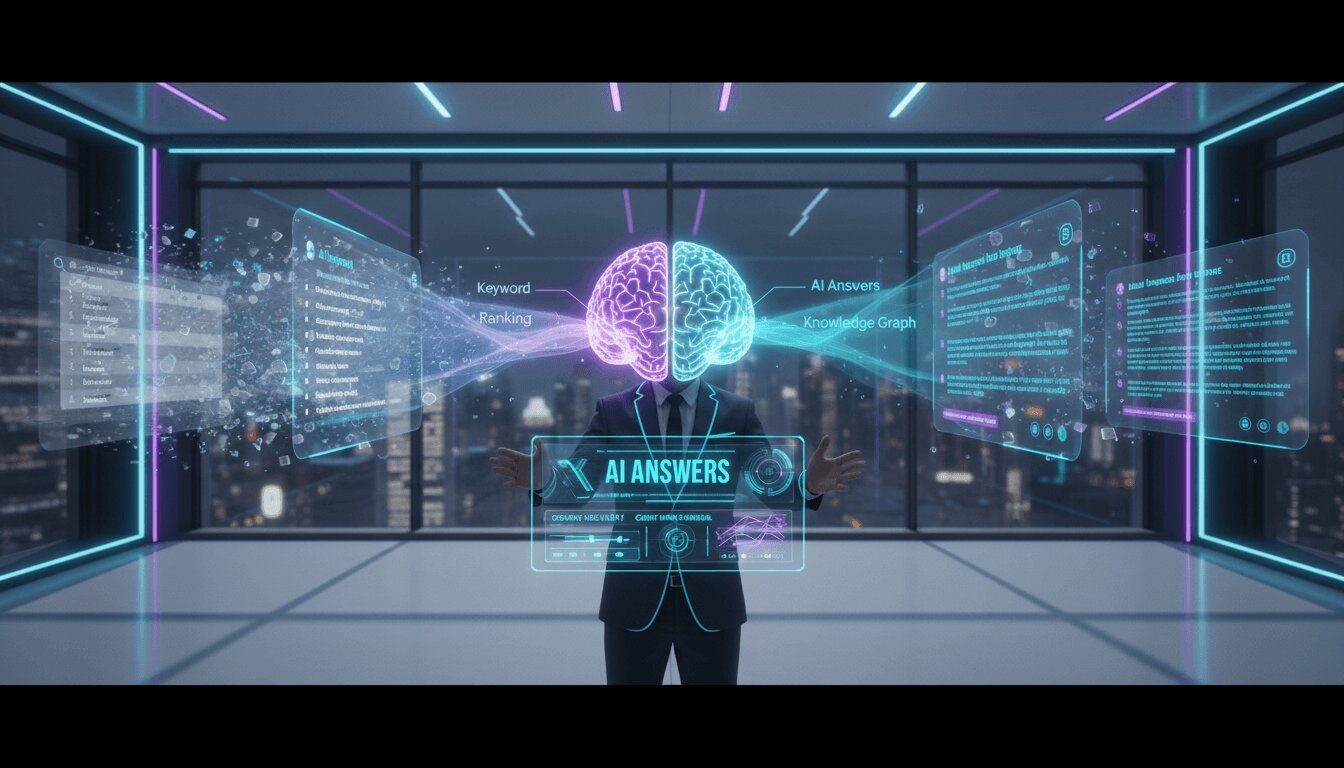
AI-driven platforms like Google SGE, ChatGPT, and Perplexity AI are changing how users interact with search. Instead of clicking through multiple results, users are getting direct answers within seconds.
This shift is not small. It changes how content is created, structured, and evaluated.
For businesses working with a modern digital marketing team, SEO is no longer just about ranking higher. It is about becoming the source that AI systems trust and present.
To understand the foundation of this shift, refer to the Answer Engine Optimization Guide (/answer-engine-optimization-guide).
The Shift from Search Results to Answers
Traditional SEO focused on ranking pages in search results. The goal was to drive clicks.
AI search changes that model. Users now receive summarized answers without needing to visit multiple websites.
This means:
- Fewer clicks for generic queries
- Higher competition for being selected
- Increased importance of content clarity
Content must now perform in two ways. It must rank and it must be selected as part of an answer.
How AI Answers Impact Visibility
Visibility is no longer limited to rankings.
AI systems extract and present information directly. This means your content may appear:
- Within an AI-generated summary
- As part of a conversational response
- Alongside other selected sources
Even if your page is not ranked first, it can still be included in AI-generated answers.
This creates new opportunities, but also new challenges.
- Content Structure Matters More Than Ever
AI systems rely heavily on structure to understand content.
Content that is well-organized is easier to extract and summarize. This includes:
- Clear headings
- Logical flow of ideas
- Concise explanations
Unstructured content, even if valuable, is often ignored.
To understand how structure supports this, refer to Semantic SEO Explained (/semantic-seo).
Importance of Context and Depth
AI answers are not built from isolated information. They rely on context.
Content that covers a topic in depth and connects related concepts performs better.
For example, a page that explains AEO along with related topics like entity SEO, internal linking, and search intent provides stronger signals than a standalone article.
This is where topical authority becomes critical.
To understand this concept, refer to What is Topical Authority in SEO (/topical-authority).
Decline of Keyword-Only Strategies
Keyword optimization alone is no longer enough.
AI systems focus on meaning rather than exact matches. They interpret queries using Natural Language Processing and analyze how well content answers the intent behind the query.
This means:
- Repetition is less important
- Context is more important
- Clarity is essential
Content must evolve from keyword-focused writing to intent-focused communication.

How AI Changes Click Behavior
AI answers reduce the number of clicks for many queries.
Users get the information they need without leaving the search interface. This is often referred to as “zero-click search.”
However, this does not eliminate traffic opportunities. It changes where and how value is captured.
Content that provides deeper insights beyond the initial answer still attracts engagement.
Role of Authority in AI-Driven SEO
Authority is becoming more important in AI search.
AI systems prefer content from sources that demonstrate:
Consistent expertise
Strong topic coverage
Reliable information
Authority is built over time through structured content and internal linking.
For brands working with a digital agency, this requires a shift toward building long-term content systems instead of isolated campaigns.
Common Mistakes in Adapting to AI SEO
Many businesses struggle to adapt to this shift.
Common mistakes include:
- Continuing to focus only on rankings
- Ignoring content structure
- Producing shallow content
- Not connecting related topics
- Lack of consistency
These issues reduce the chances of being selected by AI systems.
To avoid these, refer to common SEO mistakes (/common-seo-mistakes).
How to Adapt Your SEO Strategy
Adapting to AI-driven SEO requires a structured approach.
Focus on:
- Creating content that answers real user queries
- Structuring content for clarity and extraction
- Building topical authority through connected content
- Strengthening internal linking
- Aligning with user intent
This approach combines SEO with Answer Engine Optimization.
To implement this effectively, refer to What is AEO (/what-is-aeo).
The Future of SEO in an AI-Driven World
SEO is not disappearing. It is evolving.
The focus is shifting from ranking pages to building content systems that can be understood, selected, and presented by AI.
Businesses that adapt early will gain a strong advantage.
Content will continue to play a central role, but the way it is created and optimized will change.
To understand where this is heading, refer to future of SEO (/future-of-seo).
Conclusion
AI answers are transforming SEO from a ranking-driven strategy into an answer-driven system.
Visibility now depends on clarity, structure, context, and authority.
Businesses that adapt to this shift can position themselves as trusted sources across both search engines and AI platforms.
To build a complete strategy, revisit the Answer Engine Optimization Guide .
FAQ
How are AI answers changing SEO
AI answers reduce reliance on traditional rankings and prioritize content that can be selected and summarized.
Does AI search reduce website traffic
It can reduce clicks for simple queries but still drives traffic for deeper content.
What matters most in AI SEO
Content clarity, structure, context, and authority are key factors.
How should businesses adapt to AI SEO
Businesses should focus on structured content, topical authority, and user intent.
"AI answers are shifting SEO from rankings to relevance, where clear, authoritative content wins visibility in zero-click search experiences."