

What Are AI Search Results and How They Work

Search results are no longer just links. They are becoming answers.
AI search platforms such as Google SGE, ChatGPT, and Perplexity AI now generate responses directly on the results page. Instead of sending users to multiple websites, they provide summarized answers in real time.
These are called AI search results.
This shift changes how visibility works. Content is no longer just ranked. It is selected, summarized, and presented.
For businesses and marketers, understanding AI search results is essential to stay visible in modern search.
To understand the foundation of this shift, refer to the Answer Engine Optimization Guide (/answer-engine-optimization-guide).
What Are AI Search Results
AI search results are generated answers created by AI systems that summarize information from multiple sources to directly respond to a user’s query.
How AI Search Results Work
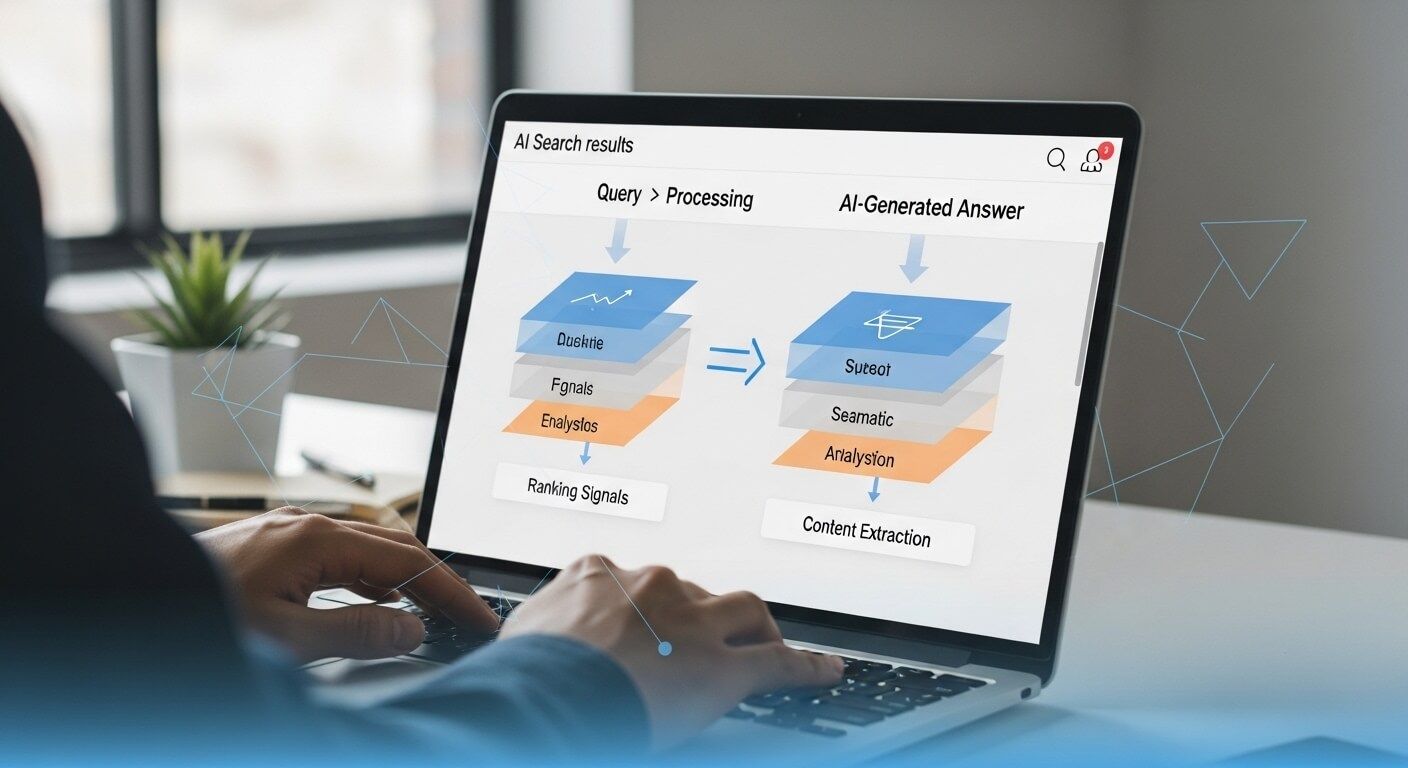
AI search results are generated through a multi-step process.
- Step 1: Query Understanding
The system analyzes the user’s query using Natural Language Processing (NLP) to understand intent and context.
- Step 2: Data Retrieval
Relevant information is gathered from indexed web content and structured sources.
- Step 3: Content Evaluation
The system evaluates content based on relevance, clarity, and authority.
- Step 4: Answer Generation
AI models summarize the information into a clear and concise response.
- Step 5: Output Delivery
The answer is presented directly to the user, often with supporting links.
This process happens instantly.
Types of AI Search Results
AI search results appear in different formats across platforms.
- AI Summaries
Generated responses that provide an overview of a topic.
- Featured Snippets
Direct answers extracted from a single source.
- Conversational Responses
Interactive answers that adapt based on follow-up questions.
- Voice Search Results
Spoken answers delivered through voice assistants.
Each format requires content to be structured for easy extraction.
How AI Search Results Differ from Traditional Results
Traditional Search Results
- Display ranked links
- Require users to click and explore
- Focus on keyword relevance
AI Search Results
- Provide direct answers
- Reduce need for multiple clicks
- Focus on context and intent
This shift reduces reliance on traditional ranking alone.
What AI Systems Look for in Content
AI systems prioritize content that is:
Clear and concise
Structured with headings and sections
Contextually rich
Factually accurate
They also evaluate:
Entity relationships
Semantic relevance
Content structure
Content that meets these criteria is more likely to be selected.
To understand how to structure content for this, refer to Semantic SEO Explained (/semantic-seo).
Why AI Search Results Matter
AI search results are changing how users interact with information.
Key impacts include:
Faster access to answers
Reduced dependency on multiple sources
Higher importance of structured content
For businesses, this means:
Visibility depends on being selected as an answer
Content must be optimized for extraction
Authority and clarity are critical
AI search results are a core part of modern search strategy.
How to Optimize for AI Search Results
To appear in AI search results, content must follow AEO principles.
Key strategies include:
- Answer Questions Directly
- Start sections with clear and concise answers.
- Use Structured Formatting
- Organize content with headings, lists, and short paragraphs.
- Build Context
- Include related concepts and explanations.
- Strengthen Authority
- Use internal linking and comprehensive coverage.
- Align with Intent
- Ensure content matches what users are searching for.
To understand how to implement this, refer to What is AEO (/what-is-aeo).
Common Mistakes in AI Search Optimization
Many businesses struggle due to poor content structure.
Common mistakes include:
- Writing long, unstructured content
- Ignoring question-based queries
- Lack of clarity in answers
- Weak semantic context
- Poor internal linking
These issues reduce the chances of being selected.
To avoid these, refer to common SEO mistakes (/common-seo-mistakes).
AI Search Results Across Platforms
AI search results are used across multiple platforms.
Examples include:
Google SGE generating summaries
ChatGPT (OpenAI) providing conversational answers
Perplexity AI combining answers with sources
Each platform uses similar principles to extract and present content.
Optimizing for one improves visibility across all.
To understand this ecosystem, refer to How AI Search Engines Work (/ai-search-engines-work).
Conclusion
AI search results are transforming how information is delivered. They shift focus from ranking pages to providing answers.
Businesses that adapt to this change gain stronger visibility and authority.
Content must now be structured, clear, and aligned with how AI systems interpret and present information.
To build a complete strategy, revisit the Answer Engine Optimization Guide (/answer-engine-optimization-guide).
FAQ
- What are AI search results
AI search results are generated answers that summarize information from multiple sources to directly respond to user queries.
- How do AI search results work
They use natural language processing to understand queries, retrieve data, and generate structured answers.
- Why are AI search results important
They improve user experience by delivering faster and more accurate answers.
- How can content appear in AI search results
Content must be clear, structured, and aligned with user intent to be selected by AI systems.
"AI search results use models to interpret queries, context, and intent, delivering direct answers instead of just links to websites."