

Common Web Development Mistakes to Avoid
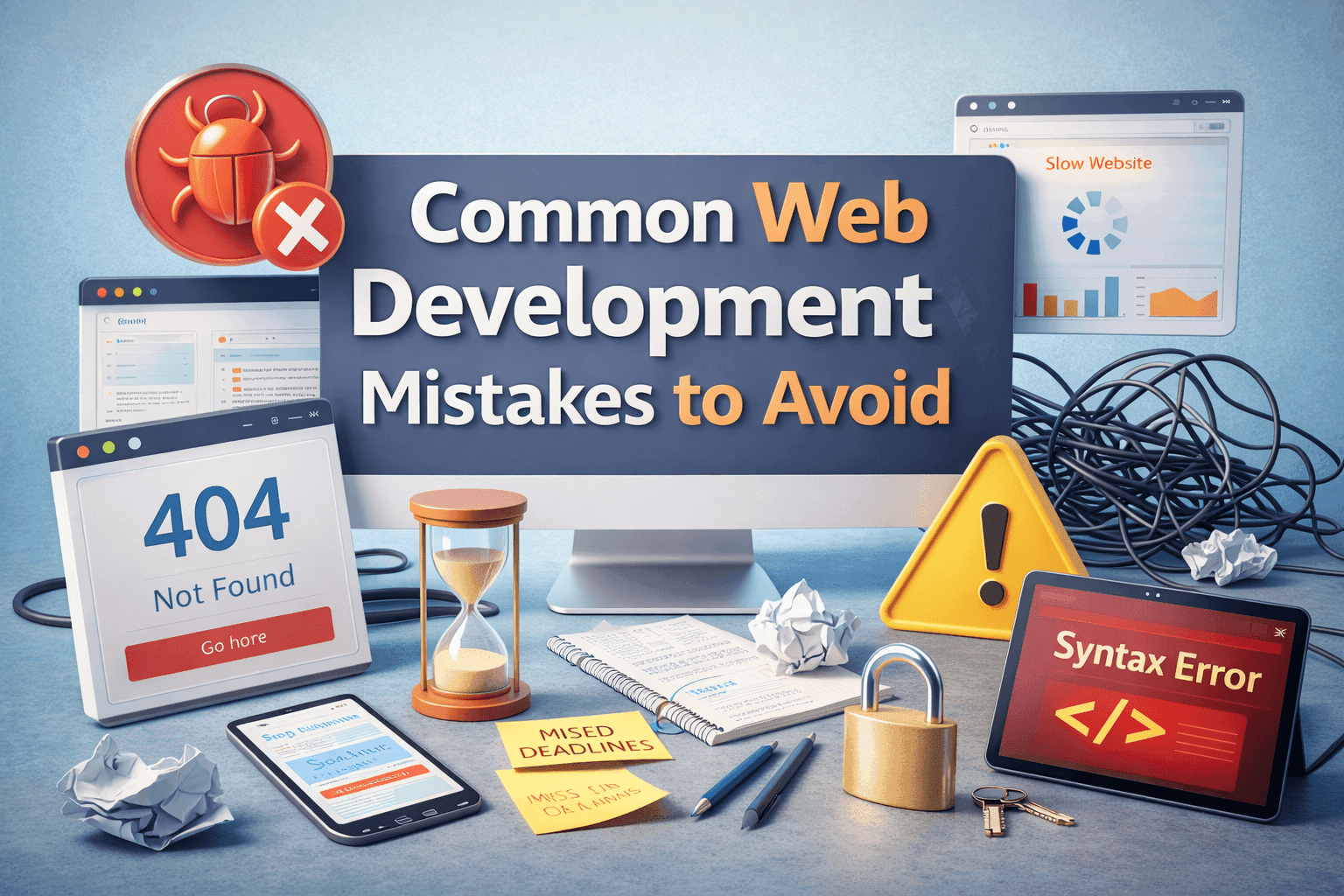
A website today is more than just a digital presence. It plays a critical role in how businesses attract, engage, and convert users. Yet, many companies invest time and money into building websites that fail to deliver results. The problem is rarely the idea it is often the execution.
Mistakes in development can affect everything from performance and user experience to search visibility and conversions. This is why choosing the right web development services and working with an experienced web development agency becomes essential. Avoiding common mistakes early helps businesses save time, reduce costs, and build platforms that truly support growth.
Lack of Clear Strategy Before Development
One of the most common mistakes businesses make is starting development without a clear strategy. Many jump straight into design and coding without defining goals, target audience, or expected outcomes.
A professional web development company begins with planning. This includes understanding user behavior, mapping customer journeys, and identifying key conversion points. Without this foundation, websites often feel disconnected and fail to guide users effectively.
A website built without strategy may look good but struggle to perform. It may not generate leads, support marketing campaigns, or align with business objectives. Planning ensures that every element on the website serves a purpose.
Poor Navigation and User Flow
User experience plays a major role in how visitors interact with a website. If users find it difficult to navigate, they are likely to leave within seconds.
Complicated menus, unclear structure, and too many options can overwhelm users. Visitors should be able to understand where to go and what to do without thinking too much.
- Some common navigation issues include:
- Overloaded menus with too many categories
- Lack of clear call-to-action buttons
- Inconsistent page layouts
- Confusing user journeys
A well-structured website makes navigation simple and intuitive. When users can easily find what they are looking for, they stay longer and are more likely to take action.
Ignoring Website Performance and Speed
Speed is one of the most critical factors in web development. A slow website not only frustrates users but also affects search engine rankings.
Modern web development technologies focus heavily on performance optimization. However, many websites still suffer from slow loading times due to poor development practices.
- Common performance issues include:
- Large, uncompressed images
- Excessive use of plugins and scripts
- Poor hosting infrastructure
- Lack of caching and optimization techniques
Even a delay of a few seconds can lead to higher bounce rates. Users expect websites to load instantly, especially on mobile devices. A fast website improves user experience, increases engagement, and supports better SEO performance.

Not Optimizing for Mobile Devices
With the majority of users browsing through mobile devices, ignoring mobile responsiveness is a major mistake. A website that works well on desktop but fails on mobile can lose a significant portion of its audience.
Responsive design ensures that websites adapt to different screen sizes and devices. This includes adjusting layouts, images, and navigation to provide a smooth experience across all platforms.
Businesses that ignore mobile optimization often face:
- Poor user engagement
- Higher bounce rates
- Lower search rankings
- Reduced conversions
A mobile-first approach is now a necessity, not an option.
Weak Security Practices
Security is often overlooked during development, but it is one of the most important aspects of a website. Poor security can lead to data breaches, loss of user trust, and serious business risks.
Effective web development services include strong security measures from the beginning. This ensures that both business data and user information are protected.
Common security mistakes include:
- Weak authentication systems
- Outdated plugins or frameworks
- Lack of HTTPS implementation
- No regular monitoring or updates
Investing in security builds trust with users and protects the website from potential threats.
Lack of Scalability and Future Planning
Many websites are built only for current needs without considering future growth. As businesses expand, their websites need to handle increased traffic, new features, and integrations.
Without scalability, businesses may need to rebuild their websites entirely, which leads to additional costs and delays.
A forward-thinking web development agency ensures that websites are built with scalability in mind. This includes flexible architecture, modular design, and the ability to integrate new technologies over time.
Planning for growth helps businesses avoid unnecessary redevelopment and ensures long-term performance.
Ignoring SEO During Development
Search engine optimization is not just about content—it also depends on how the website is built. Ignoring SEO during development can limit visibility and reduce traffic.
A well-developed website supports SEO through:
- Clean and structured code
- Fast loading speed
- Mobile responsiveness
- Proper URL structure
- Optimized metadata
When SEO is integrated into development, websites are better positioned to rank higher and attract organic traffic.
Closing Thought
A website can either support your business growth or hold it back.
The difference often comes down to the mistakes made during development.
By avoiding these common issues and focusing on strategy, performance, and user experience, businesses can build websites that truly deliver results.
"Successful websites are not just built with the right features—they are built by avoiding the wrong decisions."