

Content Marketing vs Advertising: Which Builds Better Long-Term ROI?

Every business wants better returns from marketing. The real question is not just where to spend. It is how that spend creates value over time.
Advertising and content marketing both play important roles in business growth. Advertising helps brands reach people quickly. Content marketing helps brands educate, guide, and build trust with people over a longer period.
Many businesses compare the two as separate choices. In reality, both can work well together. But when the focus is long-term ROI, content marketing often creates stronger compounding value.
What Is Content Marketing?
Content marketing is the process of creating useful content that attracts, informs, and converts your target audience. This can include blogs, guides, case studies, videos, newsletters, landing pages, whitepapers, and social media content.
The goal is not to push a product directly at every step. The goal is to help people solve problems, understand their options, and trust your brand before they make a decision.
For example, a business offering software development services can publish blogs on web application development, mobile app frameworks, software testing, and digital transformation. These topics attract people who are already researching solutions.
Over time, this content becomes a growth asset.
What Is Advertising?
Advertising is paid promotion used to reach a specific audience. This includes Google Ads, Meta Ads, LinkedIn Ads, YouTube Ads, display ads, and remarketing campaigns.
Advertising works because it gives fast visibility. A business can launch a campaign today and start getting traffic or leads almost immediately.
Paid ads are useful for product launches, seasonal offers, service promotions, lead generation, and remarketing. They help brands appear in front of people who are already searching or browsing.
But advertising depends on continuous spending. Once the budget stops, visibility usually drops.
The Main Difference Between Content Marketing and Advertising
The biggest difference is how both create value.
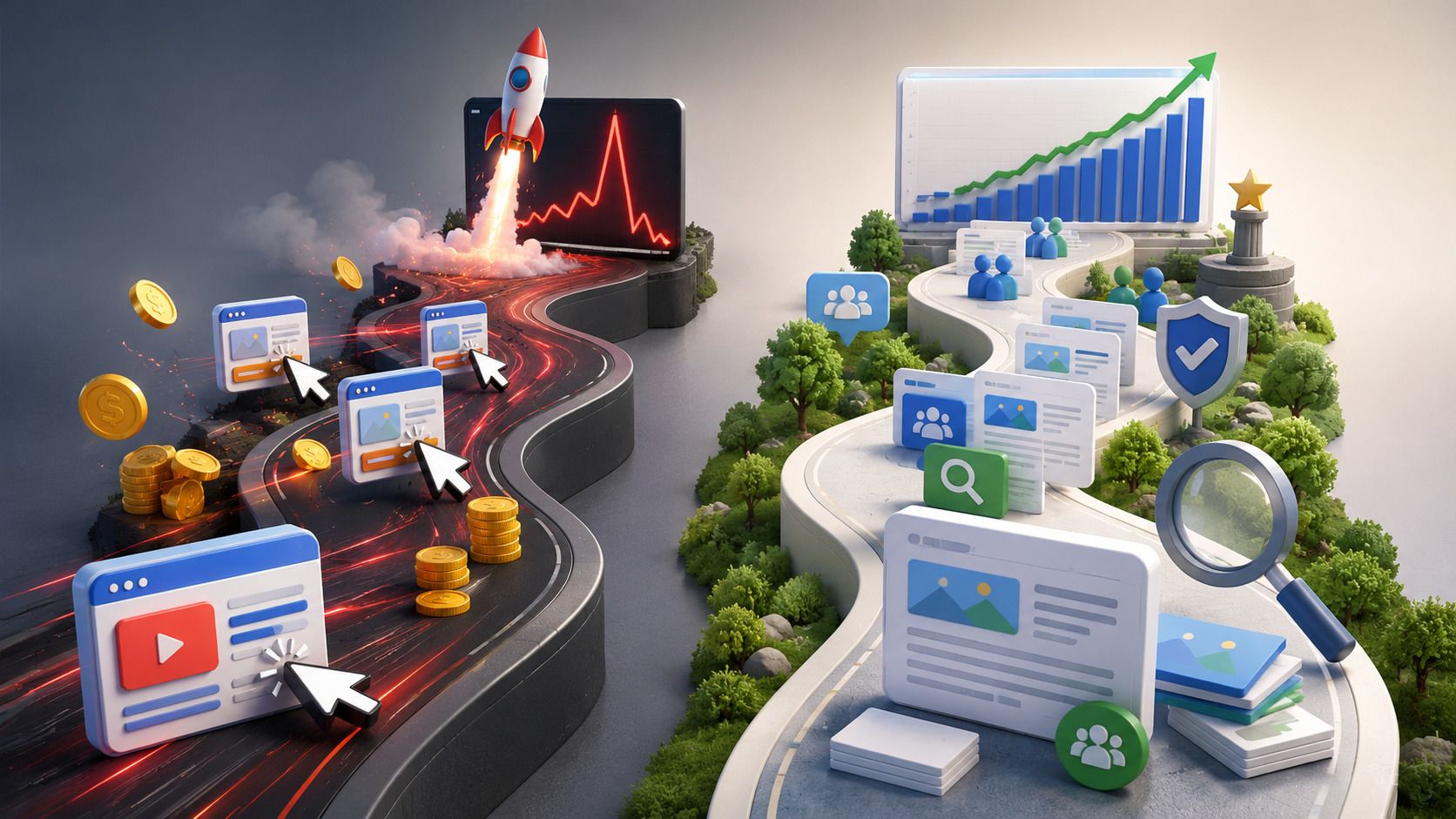
Advertising creates instant reach. Content marketing creates lasting visibility.
With advertising, you pay for attention. With content marketing, you earn attention through usefulness, relevance, and trust.
A paid campaign may bring leads quickly, but the impact usually lasts only as long as the campaign is active. A strong blog, guide, or landing page can continue bringing traffic and leads for months or even years.
This is why businesses focused on long-term digital growth often invest in SEO-led content strategies along with paid campaigns.
Which One Delivers Faster Results?
Advertising is the clear winner for speed.
If your business needs immediate enquiries, paid campaigns can help. Google Ads can target people who are actively searching for your service. Meta Ads can create awareness and generate leads based on interest, location, and behavior.
This makes advertising useful when:
• You are launching a new service
• You need leads within a short period
• You want to test a market quickly
• You are promoting a limited-time offer
• You want to retarget website visitors
Content marketing takes more time. A blog may not rank immediately. A landing page may need SEO improvements, internal links, and authority signals before it starts performing well.
But once content starts working, it can reduce dependency on paid traffic.
Which One Builds Better Trust?
Content marketing has a stronger role in trust building.
People rarely buy from a business after one ad. They usually research, compare, read reviews, check websites, and look for proof. Useful content helps them feel informed before they contact a brand.
A detailed blog can answer objections. A case study can show real results. A service page can explain the process. A comparison guide can help users make better decisions.
Advertising can create awareness, but content builds confidence.
For service-based businesses, this trust matters even more. Customers want to know that the company understands their problem, has a clear approach, and can deliver measurable results.
Long-Term ROI: Why Content Marketing Has an Advantage
Content marketing often delivers stronger long-term ROI because it compounds.
A paid ad stops when the budget stops. A high-quality blog can continue ranking. A well-optimized service page can keep generating enquiries. A useful guide can support sales conversations. A case study can build proof for years.
This means content has asset value.
Over time, one strong piece of content can support:
• Organic search traffic
• Lead generation
• Sales enablement
• Brand authority
• Email nurturing
• Social media distribution
• Internal linking
• AI search visibility
The return is not limited to one campaign window. Good content can support multiple business goals at once.
This is especially useful for businesses investing in Digital Marketing Services in Houston, where local competition, search visibility, and customer trust all influence lead quality.
Advertising ROI: Where Paid Campaigns Still Win
Advertising still has a clear place in the marketing mix.
Paid campaigns are highly measurable. You can track clicks, impressions, conversions, cost per lead, and return on ad spend. You can also test messages quickly.
This makes advertising helpful for businesses that need quick market feedback. You can test different headlines, offers, landing pages, and audience segments before building a long-term content strategy.
Advertising also supports content marketing. For example, a strong blog can be promoted through LinkedIn Ads. A service page can be used in Google search campaigns. A case study can be shown to remarketing audiences.
Paid media works best when it sends users to strong content, not weak landing pages.
Why Content and Advertising Should Work Together
The best growth strategy is not content marketing or advertising. It is content marketing and advertising working together.
Advertising brings people in faster. Content keeps them engaged and helps them convert.
Here is how both can support each other:
1. Ads Create Fast Traffic
Paid campaigns bring targeted visitors to your website quickly. This helps generate leads while SEO and content gain traction.
2. Content Improves Conversion
When visitors land on helpful pages, they are more likely to trust the brand. Strong content can improve lead quality and conversion rates.
3. SEO Reduces Paid Dependency
As organic visibility improves, businesses can reduce pressure on ad spend. This creates better long-term cost efficiency.
4. Remarketing Becomes Stronger
People who read blogs, visit service pages, or download guides can be retargeted with more relevant ads later.
5. Sales Teams Get Better Support
Content gives sales teams useful material to share with prospects. This improves follow-ups and helps move leads through the funnel.
Which Strategy Should Your Business Prioritize?
The answer depends on your goal.
If you need immediate enquiries, advertising should be part of your plan. If you want sustainable visibility, stronger authority, and lower long-term acquisition costs, content marketing needs serious focus.
For most growing businesses, the right approach is phased.
Start with paid campaigns to generate early traffic and leads. At the same time, build SEO-focused content around customer problems, service queries, and buying intent. As content begins to rank, your organic lead flow becomes stronger.
This creates balance. You are not fully dependent on ads, and you are not waiting too long for results.
How a Digital Marketing Partner Can Help
A strong digital marketing partner connects content, SEO, paid ads, analytics, and conversion strategy.
Instead of treating blogs, ads, and landing pages as separate activities, the right team builds a connected system. This means every campaign, page, and content piece supports a larger growth goal.
A professional team can help with:
• Keyword strategy
• Blog planning
• SEO content creation
• Paid ad campaigns
• Landing page optimization
• Conversion tracking
• Remarketing strategy
• Performance reporting
This helps businesses make better decisions and invest in channels that support both short-term leads and long-term growth.
Final Thoughts
Advertising is powerful for fast visibility. Content marketing is stronger for long-term ROI.
Paid campaigns can help your business reach the right audience quickly. But content builds the trust, authority, and organic presence that continue working after the first click.
For lasting growth, businesses should not depend only on ads. They need a content system that educates customers, supports SEO, improves conversions, and strengthens brand credibility.
The smartest strategy is to use advertising for speed and content marketing for sustainability. Together, they create a stronger path to measurable, long-term business growth.
"Advertising can create fast attention. Content marketing builds the trust that keeps bringing customers back."