

Digital Marketing for Startups: How to Grow with Limited Budgets

Startups often need growth before they have large marketing budgets. The pressure is high. Leads are needed. Sales must move. Brand awareness has to grow. But every dollar spent needs to work harder.
This is where digital marketing becomes useful.
A startup does not need to be active on every platform from day one. It needs a focused plan that brings visibility, builds trust, attracts the right audience, and improves conversions without wasting money.
With the right strategy, startups can grow steadily even with limited budgets.
Why Startups Need Digital Marketing Early
Many startups wait too long to build their digital presence. They focus on product, operations, hiring, and sales, but leave marketing for later.
This can slow down growth.
Customers need to find your business before they can trust it. They need to understand what you offer, why it matters, and why they should choose you over others.
Digital marketing helps startups:
• Create early brand visibility
• Explain the product or service clearly
• Reach the right audience
• Generate qualified leads
• Test market response
• Build trust through content
• Track what works
• Improve sales conversations
Early digital marketing does not need to be expensive. It needs to be clear and consistent.
Start With a Clear Target Audience
Limited budgets cannot support broad marketing.
Before spending on ads or content, startups need to define the audience clearly. This helps avoid wasting money on people who are unlikely to buy.
A startup should know:
• Who the ideal customer is
• What problem they face
• Where they spend time online
• What they search for
• What objections they have
• What type of content they trust
• What action they should take next
The sharper the audience definition, the better the campaign performance.
For example, a B2B startup may focus on founders, operations heads, or marketing leaders. A consumer startup may focus on age, lifestyle, location, interest, and buying behavior.
Build a Simple but Strong Website
A startup website does not need to be large. But it must be clear.
Many startups lose leads because their website does not explain the offer properly. Visitors should understand the product or service within a few seconds.
A strong startup website should include:
• Clear headline
• Simple value proposition
• Product or service benefits
• Who it is for
• Trust signals
• Pricing or enquiry option
• Strong call-to-action
• Contact form
• Mobile-friendly design
• Fast loading speed
The website should guide users toward one main action, such as booking a demo, requesting a quote, signing up, or contacting the team.
Focus on SEO for Long-Term Visibility
SEO is one of the most useful long-term channels for startups.
It may not bring results overnight, but it helps reduce dependency on paid ads over time. When your website starts ranking for relevant searches, organic traffic can become a steady source of leads.
Startups should begin with practical SEO basics:
• Optimize service or product pages
• Use clear page titles and meta descriptions
• Create useful blogs around customer questions
• Improve website speed
• Add internal links
• Use location-based pages where needed
• Fix technical SEO issues
• Add schema where relevant
A startup using Digital Marketing Services in Miami can build search visibility by targeting local service keywords, customer pain points, and solution-based content that matches buyer intent.
Use Content Marketing to Build Trust
Content marketing is powerful for startups because it helps educate people before selling to them.
Many customers do not buy from a startup immediately because they do not know the brand yet. Useful content helps reduce that hesitation.
Startups can create:
• Blog articles
• FAQs
• Guides
• Case studies
• Short videos
• LinkedIn posts
• Product explainers
• Customer success stories
• Comparison content
The content should answer real questions. It should help customers understand the problem, solution, process, and outcome.
Good content also supports SEO, social media, email marketing, and sales follow-up.
Choose Social Media Platforms Carefully
Startups do not need to post everywhere.
It is better to be strong on one or two platforms than weak on five. Choose platforms based on where your audience spends time.
For B2B startups, LinkedIn may be more useful. For consumer brands, Instagram, TikTok, YouTube, or Facebook may work better. For visual products, Pinterest and Instagram can help. For educational content, YouTube and LinkedIn can support authority.
A good social media plan should include:
• Educational posts
• Founder-led content
• Product updates
• Customer stories
• Behind-the-scenes posts
• Short videos
• Testimonials
• Lead-focused CTAs
The goal is not only likes. The goal is awareness, trust, conversations, and enquiries.
Use Paid Ads Carefully
Paid ads can help startups get faster visibility, but they can also waste money quickly.
Start small. Test one platform, one audience, and one clear offer before scaling.
Google Ads works well when people are already searching for your product or service. Meta Ads work well for awareness, interest generation, and retargeting. LinkedIn Ads can work for B2B, but costs may be higher.
For startups, paid ads should focus on learning first.
Track:
• Which audience responds
• Which message gets clicks
• Which landing page converts
• Which leads are serious
• Which campaigns bring sales conversations
Do not scale campaigns only because they bring cheap leads. Scale when they bring qualified leads.
Retarget Interested Visitors
Retargeting is useful for startups because most people do not convert on the first visit.
A user may visit your website, check pricing, read a blog, or watch a video and leave. Retargeting helps bring them back with a better message.
Retargeting ads can show:
• Testimonials
• Case studies
• Demo offers
• Free consultations
• Product benefits
• Limited offers
• Educational content
This is often more cost-effective than targeting completely cold audiences again.
Warm audiences already know your brand. They usually need more confidence before taking action.
Use Email Marketing for Nurturing
Email marketing is affordable and useful for startups.
Once someone downloads a resource, signs up, requests information, or joins your list, email can keep the conversation going.
A simple email sequence can include:
• Welcome email
• Problem education
• Product or service explanation
• Customer proof
• Helpful tips
• Demo or consultation offer
Email helps build trust over time. It also keeps your startup visible until the buyer is ready.
For B2B startups with longer sales cycles, email nurturing can support better follow-up and improve conversion chances.
Track Every Important Action
Startups cannot afford unclear marketing.
Tracking helps you understand what is working and what is wasting budget.
Set up tracking for:
• Website visits
• Form submissions
• Phone calls
• Demo bookings
• Email signups
• Ad clicks
• Conversion rates
• Lead source
• Cost per lead
• Sales-qualified leads
Do not measure only traffic or impressions. Measure actions that connect to business growth.
Good tracking helps startups make faster and smarter decisions.
Improve Conversion Before Increasing Spend
Many startups spend more money before fixing conversion problems.
This can be costly.
Before increasing ad budget, check whether your website, landing page, forms, CTAs, and follow-up process are working well.
Simple improvements can increase results without more spend.
For example:
• Make the headline clearer
• Shorten the form
• Add testimonials
• Improve page speed
• Add a stronger CTA
• Explain pricing better
• Add FAQs
• Improve mobile layout
Better conversion means every marketing dollar works harder.
Build Proof as Early as Possible
Startups need trust signals because they are still building credibility.
Even small proof points can help.
Use:
• Early customer testimonials
• Pilot project results
• Founder experience
• Product demos
• User feedback
• Case study snippets
• Industry partnerships
• Media mentions
• Review screenshots
Proof reduces risk in the customer’s mind.
If there are no big case studies yet, share progress, process, expertise, and customer feedback honestly.
Common Digital Marketing Mistakes Startups Should Avoid
Many startups lose money because they try to do too much too soon.
Common mistakes include:
• Running ads without a clear landing page
• Targeting too broad an audience
• Posting without strategy
• Ignoring SEO basics
• Not tracking leads
• Copying competitors blindly
• Spending before testing
• Focusing only on followers
• Not following up quickly
• Changing campaigns too often
Startups need focus. A small but consistent strategy is better than scattered activity.
Final Thoughts
Digital marketing for startups should be simple, focused, and measurable.
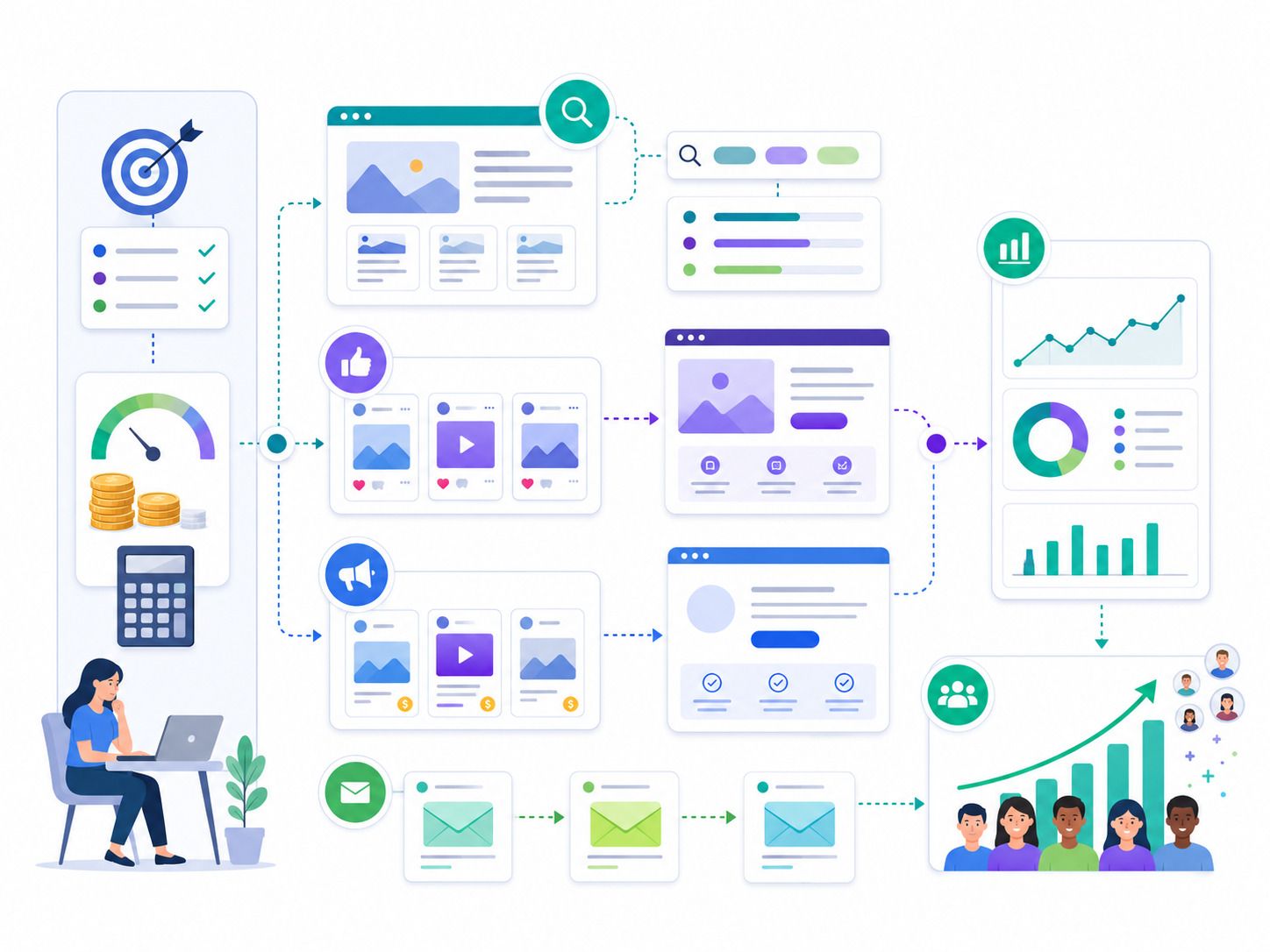
Start with a clear audience. Build a strong website. Use SEO and content to create long-term visibility. Choose the right social platforms. Test paid ads carefully. Retarget warm visitors. Use email to nurture leads. Track every important action.
Limited budgets are not a weakness when the strategy is sharp.
Startups that focus on the right channels, clear messaging, and better conversion can grow steadily without overspending. The goal is not to market everywhere. The goal is to spend where it creates real traction, trust, and revenue.
"“Startups do not need to spend everywhere. They need to focus on the channels that bring visibility, trust, leads, and early customer traction.”"