

Digital Marketing Strategy: How to Build a Full-Funnel Growth Plan
A business can get traffic and still struggle to grow. It can run ads and still receive poor-quality leads. It can post on social media every day and still see little impact on sales.
This usually happens when marketing activities are not connected.
A strong digital marketing strategy brings every channel together with one clear purpose. It helps a business attract the right audience, build trust, convert leads, and retain customers. Instead of treating SEO, ads, content, social media, and email as separate tasks, a full-funnel plan connects them across the complete customer journey.
What Is a Digital Marketing Strategy?
A digital marketing strategy is a planned approach to promote a business through online channels. It defines the audience, goals, platforms, content, campaigns, budget, and measurement process.
It answers important questions such as:
• Who are we trying to reach?
• What problem does the audience have?
• Which platforms do they use?
• What message will make them trust us?
• How will we convert them into leads or customers?
• How will we measure success?
Without a strategy, marketing becomes random. Teams may publish blogs, run ads, or create social posts without knowing how each activity supports business growth.
A proper strategy gives direction. It helps every campaign work toward a clear goal.
What Does Full-Funnel Growth Mean?
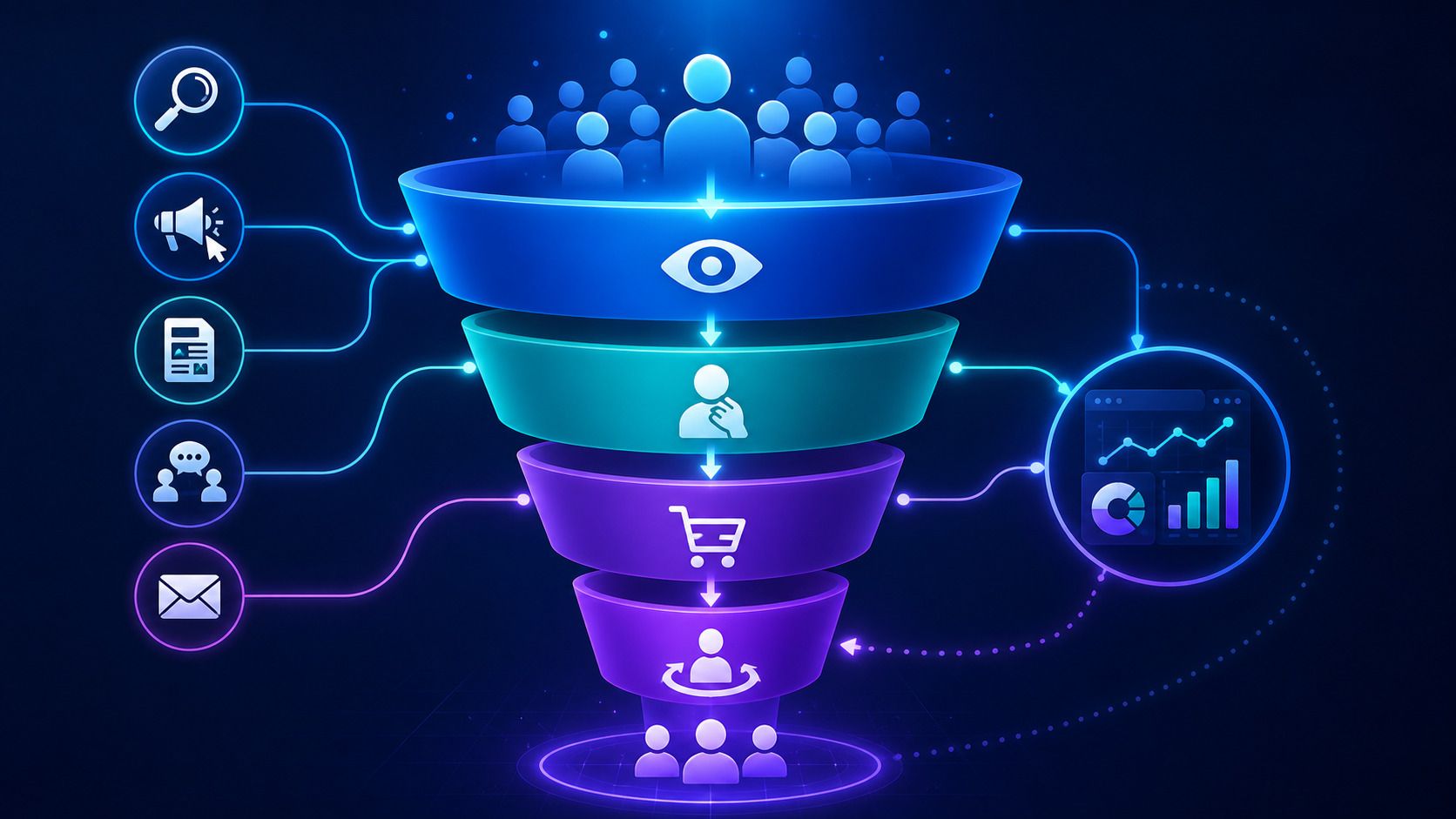
Full-funnel growth means marketing to customers at every stage of their journey. Not every customer is ready to buy immediately. Some are just discovering a problem. Some are comparing service providers. Some are ready to speak to a sales team. Others may already be customers who need continued engagement.
A full-funnel digital marketing plan usually includes four stages:
1. Awareness
2. Consideration
3. Conversion
4. Retention
Each stage needs a different message, channel, and content format.
Stage 1: Build Awareness
Awareness is the first stage of the funnel. At this point, people may not know your brand yet. They may only know they have a problem or goal.
For example, a business owner may search for ways to improve website traffic, generate leads, or increase brand visibility. They may not be ready to hire an agency yet. But they are actively learning.
At this stage, your goal is to become visible and useful.
Common awareness channels include:
• SEO blogs
• Social media posts
• YouTube videos
• Display ads
• LinkedIn thought leadership
• Educational guides
• Short-form videos
The content should focus on customer problems, market trends, common mistakes, and useful answers. Avoid pushing sales too early. The purpose is to make the audience aware of your brand and your expertise.
Stage 2: Build Trust During Consideration
Once people understand their problem, they start comparing options. They may search for agencies, check reviews, read case studies, compare pricing, visit service pages, and look for proof.
This is the consideration stage.
Here, your digital marketing strategy should focus on building confidence. The audience wants to know whether your business can solve their problem.
Useful content at this stage includes:
• Service pages
• Case studies
• Client testimonials
• Comparison blogs
• Industry-specific landing pages
• Portfolio pages
• FAQs
• Lead magnets
For example, a company searching for Digital Marketing Services in New York may want to understand the agency’s service range, local market knowledge, SEO approach, paid campaign expertise, and performance tracking process.
This is where clear messaging matters. Your website should explain what you do, who you help, how your process works, and why your approach is reliable.
Stage 3: Convert Leads Into Customers
The conversion stage is where users take action. They may fill a form, call the business, book a consultation, request a proposal, download a guide, or sign up for a demo.
Many businesses lose leads at this stage because their landing pages are unclear. Sometimes the CTA is weak. Sometimes the page has too much information. Sometimes the trust signals are missing.
To improve conversions, focus on:
• Clear page headlines
• Strong call-to-action buttons
• Simple enquiry forms
• Fast-loading pages
• Mobile-friendly design
• Client logos or proof points
• Testimonials
• Service benefits
• Clear contact options
Paid ads also play an important role here. Search ads can target users with strong buying intent. Remarketing ads can bring back visitors who did not convert earlier. Landing pages can be created for specific services, industries, or locations.
Conversion is not only about getting more clicks. It is about helping the right users take the next step with confidence.
Stage 4: Retain and Re-Engage Customers
Many businesses focus only on getting new customers. But retention is also part of growth. Existing customers are easier to engage because they already know the brand.
Digital marketing can support retention through:
• Email newsletters
• Customer education content
• Social media engagement
• Remarketing campaigns
• Loyalty offers
• Product updates
• Helpful guides
• Review campaigns
For service-based businesses, retention can also come through regular reporting, performance reviews, and new growth recommendations.
A full-funnel strategy does not end after a lead converts. It continues to build relationships.
Key Channels in a Full-Funnel Digital Marketing Strategy
A strong digital marketing strategy uses the right channels for each stage of the funnel. The goal is not to use every platform. The goal is to choose the channels that match your audience and business goals.
SEO
SEO helps improve long-term visibility. It brings users who are already searching for answers, services, or solutions. SEO works across awareness, consideration, and conversion stages.
A strong SEO plan includes keyword research, technical SEO, local SEO, content strategy, on-page optimization, and authority building.
Paid Advertising
Paid ads support faster reach and lead generation. Google Ads, Meta Ads, LinkedIn Ads, and display campaigns can target users based on intent, location, interest, and behavior.
Paid campaigns work best when they are supported by strong landing pages and proper tracking.
Content Marketing
Content helps educate, attract, and convert audiences. Blogs, service pages, guides, case studies, FAQs, and videos help answer customer questions.
Content also supports SEO, social media, email marketing, and sales conversations.
Social Media Marketing
Social media helps build visibility, engagement, and brand recall. It gives businesses a platform to share insights, updates, testimonials, videos, offers, and brand stories.
The right social media strategy depends on the audience. B2B brands may focus more on LinkedIn. B2C brands may use Instagram, Facebook, and YouTube more actively.
Email Marketing
Email helps nurture leads and retain customers. It can be used to share useful content, offers, product updates, event invites, and follow-up messages.
Email works best when messages are segmented based on user interest and funnel stage.
Analytics and Tracking
A digital marketing strategy is incomplete without measurement. Analytics helps businesses understand what is working and what needs improvement.
Important metrics include:
• Website traffic
• Keyword rankings
• Click-through rate
• Cost per lead
• Conversion rate
• Lead quality
• Bounce rate
• Engagement rate
• Return on ad spend
Tracking helps teams make better decisions instead of depending on assumptions.
How to Build a Full-Funnel Digital Marketing Plan
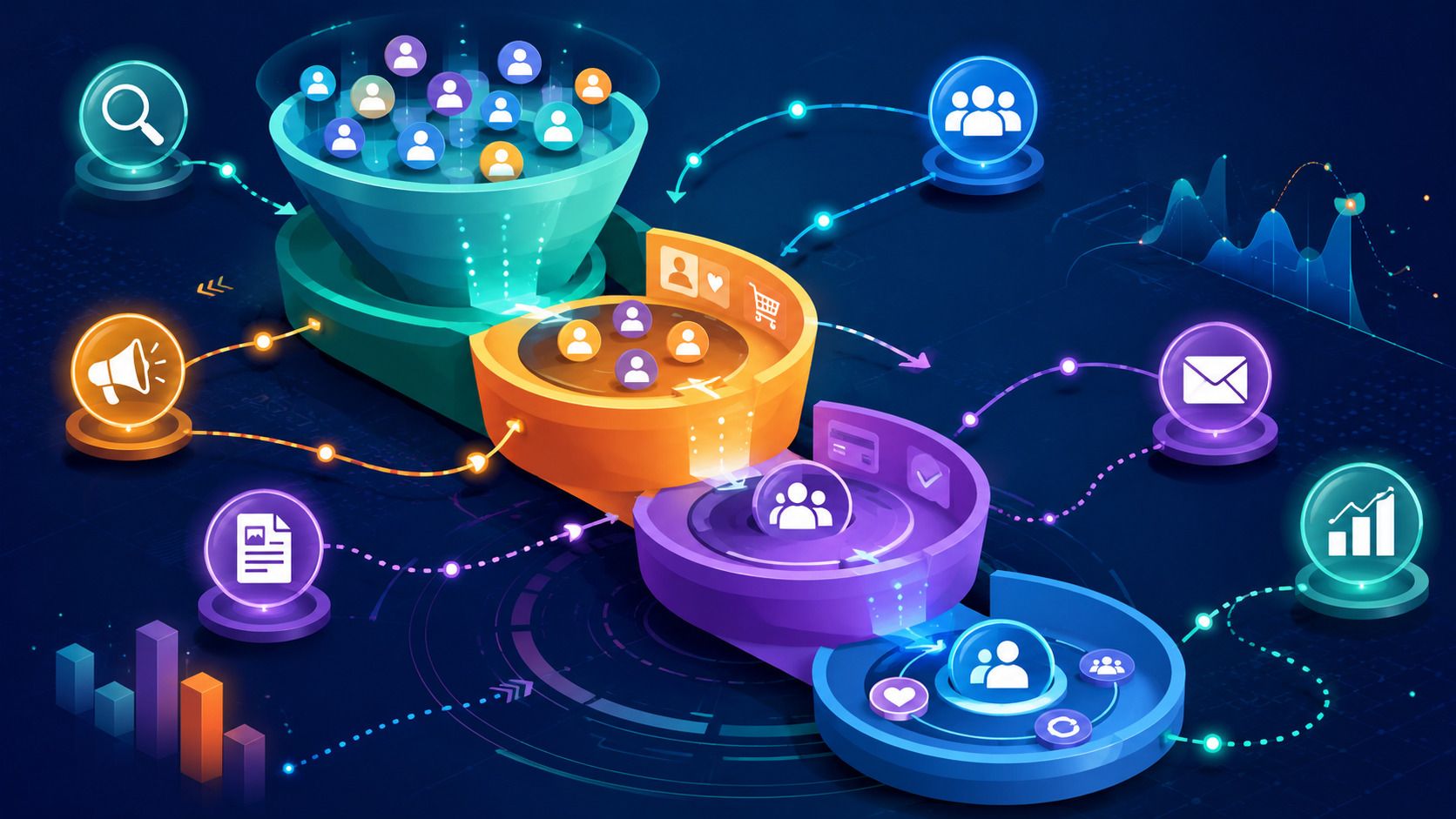
A full-funnel growth plan needs structure. Each step should connect with the next.
1. Define Business Goals
Start with clear goals. Do you want more leads, more website traffic, better brand awareness, higher sales, or improved customer retention?
Your goal will decide the channels, content, budget, and campaign structure.
2. Understand the Target Audience
Create a clear audience profile. Identify their problems, search behavior, buying concerns, preferred platforms, and decision-making process.
A good strategy begins with knowing who you are speaking to.
3. Map the Customer Journey
List the stages your customer goes through before making a decision. Identify what they need at each stage.
For example:
• Awareness: educational blogs and videos
• Consideration: service pages and case studies
• Conversion: landing pages and offers
• Retention: email updates and customer content
This helps you create the right content for the right moment.
4. Choose the Right Channels
Not every business needs every channel. A local service business may need SEO, Google Ads, Google Business Profile, and landing pages. A B2B company may need LinkedIn, thought leadership content, SEO, and email marketing.
Choose channels based on audience behavior and growth goals.
5. Create Funnel-Based Content
Content should match user intent. Awareness content should educate. Consideration content should build trust. Conversion content should encourage action. Retention content should strengthen relationships.
This makes content more useful and more effective.
6. Set Up Tracking
Before campaigns go live, set up tracking. Use tools such as Google Analytics, Google Tag Manager, call tracking, CRM tracking, and conversion pixels.
This helps you know where leads come from and which campaigns perform better.
7. Review and Improve
A digital marketing strategy should not remain fixed forever. Review performance regularly. Improve weak pages. Pause poor ads. Update old content. Test new CTAs. Study lead quality.
Growth improves when strategy and execution are reviewed together.
How BrandStory Helps Build Full-Funnel Growth
BrandStory creates digital marketing strategies designed around business goals, customer intent, and performance. The approach connects SEO, paid campaigns, content marketing, social media, website strategy, analytics, and conversion optimization.
The focus is not only on traffic or visibility. The focus is on attracting the right audience, building trust, generating better leads, and improving long-term growth.
Each plan is built after understanding the business model, competition, audience behavior, service offering, and current digital presence. This helps create a strategy that is practical, measurable, and aligned with business outcomes.
Conclusion
A strong digital marketing strategy is not a collection of random activities. It is a connected growth plan that guides customers from awareness to trust, action, and retention.
A full-funnel approach helps businesses reach the right people, answer their questions, build confidence, and convert interest into measurable opportunities.
Businesses that invest in a structured strategy can reduce wasted effort, improve lead quality, and build stronger digital visibility over time.
"A strong digital marketing strategy connects awareness, trust, lead generation, and conversion into one focused growth system."