

E-Commerce Digital Marketing: How to Increase Traffic, ROAS, and Sales

E-commerce growth is not only about launching an online store. The real challenge is bringing the right shoppers to the website, helping them trust the brand, and turning visits into sales.
Many online stores get traffic but struggle with poor conversions. Some run paid ads but do not get strong ROAS. Others depend only on discounts and lose profit over time.
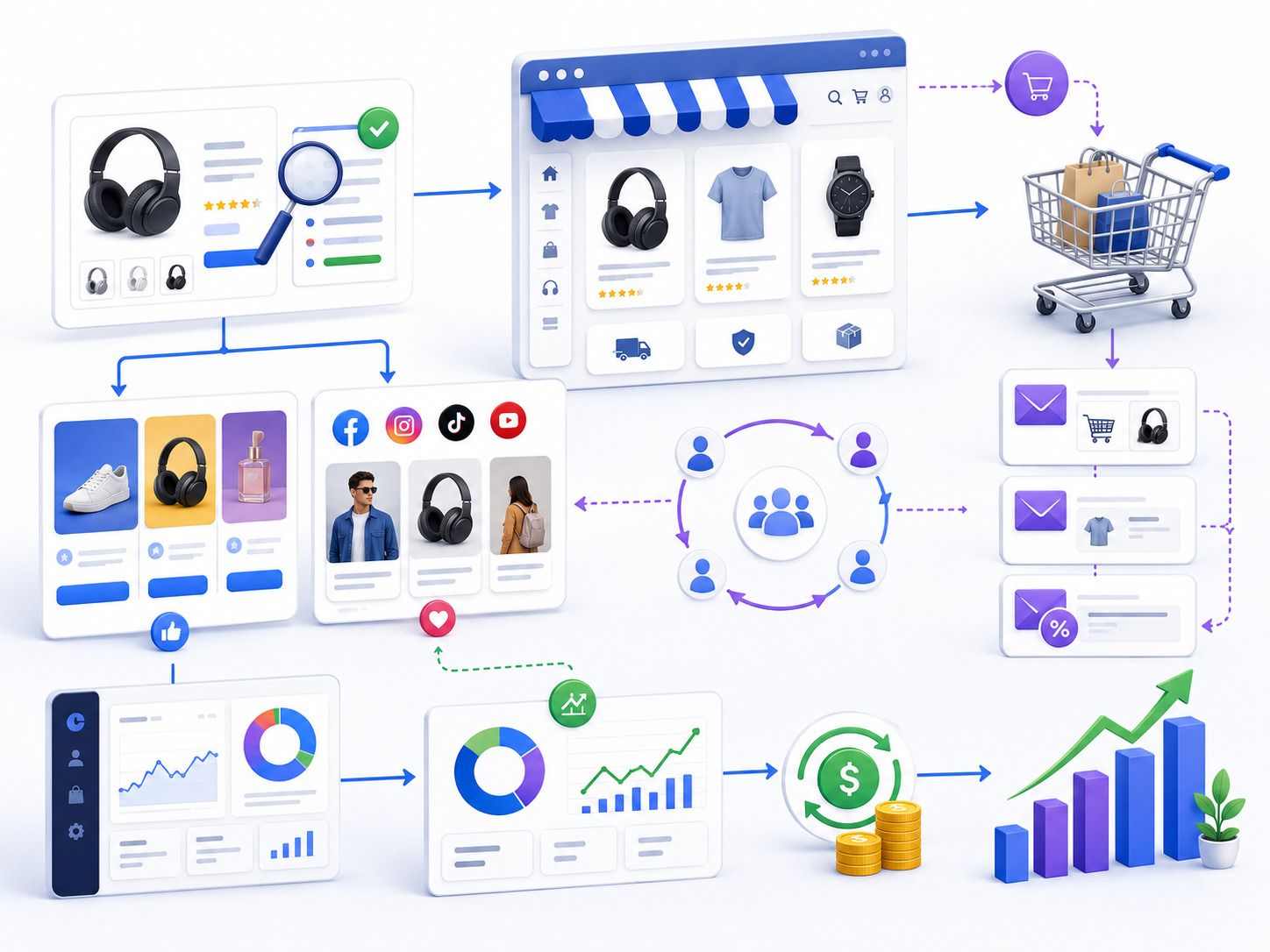
A strong e-commerce digital marketing strategy connects SEO, paid ads, social media, email, product pages, analytics, and remarketing into one sales-focused system.
What Is E-Commerce Digital Marketing?
E-commerce digital marketing is the process of promoting an online store through digital channels to increase traffic, sales, repeat purchases, and revenue.
It includes search engine optimization, Google Shopping Ads, Meta Ads, social media marketing, influencer campaigns, email automation, content marketing, marketplace promotion, and conversion optimization.
The goal is not only to bring visitors. The goal is to attract shoppers who are likely to buy and return.
For e-commerce brands, every click, product view, cart action, and purchase tells a story. Good marketing uses that data to improve results.
Why Traffic Alone Is Not Enough
Traffic is important, but traffic without sales can waste money.
An online store may get thousands of visitors, but if users do not trust the product, find the right size, understand the offer, or complete checkout, sales will stay low.
E-commerce success depends on three things working together:
• Relevant traffic
• Strong product experience
• Clear conversion journey
If paid ads bring the wrong audience, ROAS drops. If product pages are weak, users leave. If checkout is confusing, carts are abandoned.
That is why e-commerce marketing must focus on the full buyer journey.
Use SEO to Build Long-Term Traffic
SEO helps e-commerce brands attract shoppers who are searching for products, categories, comparisons, and buying guides.
Strong e-commerce SEO includes product page optimization, category page optimization, technical SEO, internal linking, content marketing, image optimization, and structured data.
For example, an online fashion store can create optimized category pages for dresses, shoes, accessories, and seasonal collections. A skincare brand can write blogs around skin concerns, ingredients, routines, and product usage.
SEO supports long-term traffic and reduces complete dependency on paid ads.
A brand investing in Digital Marketing Services in Atlanta can use SEO to improve product visibility, local search presence, and organic sales opportunities across competitive e-commerce categories.
Optimize Product Pages for Better Sales
Product pages are where buying decisions happen.
A good product page should answer every important question before the customer hesitates. If shoppers are confused, they may leave or compare another brand.
Strong product pages include:
• Clear product title
• High-quality images
• Short product description
• Benefits and features
• Price and offer details
• Size, color, or variant options
• Customer reviews
• Delivery information
• Return policy
• Secure checkout signals
• Clear add-to-cart button
The copy should focus on what the product does for the customer, not only technical details.
Use Paid Ads to Scale Revenue
Paid ads help e-commerce brands grow faster when campaigns are planned properly.
Google Shopping Ads work well because they show products to people already searching. Meta Ads and TikTok Ads help create interest through visuals, offers, lifestyle content, and retargeting.
Paid channels can support:
• Product launches
• Seasonal sales
• Bestselling products
• New collections
• Cart recovery
• Customer acquisition
• Repeat purchase campaigns
• Retargeting
The key is to track revenue, not just clicks. A campaign with high traffic and low sales needs improvement. A campaign with lower traffic but strong purchases may deserve more budget.
Improve ROAS With Better Campaign Structure
ROAS, or return on ad spend, shows how much revenue is generated for every amount spent on ads.
For example, if a brand spends $1,000 and earns $5,000 in sales, the ROAS is 5x.
To improve ROAS, e-commerce brands need clear campaign structure.
This includes separating campaigns by product category, audience intent, margin, bestseller status, and funnel stage. High-margin products may need different budgets than low-margin items. New customers may need different messaging than repeat buyers.
Better structure helps brands understand which products and audiences are truly profitable.
Use Retargeting to Recover Lost Shoppers
Most shoppers do not buy on the first visit.
They may view a product, add it to cart, compare prices, or wait for an offer. Retargeting helps bring them back.
Retargeting ads can show:
• Products viewed
• Cart reminders
• Limited-time offers
• Customer reviews
• Bestseller recommendations
• Free shipping messages
• Similar products
• New arrivals
These campaigns often improve conversions because the audience already knows the brand.
Retargeting should feel helpful, not repetitive. Refresh creatives regularly and exclude customers who already purchased.
Reduce Cart Abandonment
Cart abandonment is one of the biggest challenges in e-commerce.
Customers may leave because of unexpected shipping costs, long checkout forms, lack of payment options, slow loading pages, or unclear return policies.
To reduce cart abandonment, improve the checkout journey.
Useful improvements include:
• Show shipping costs early
• Offer multiple payment options
• Keep checkout short
• Add guest checkout
• Display trust signals
• Mention return policy clearly
• Use abandoned cart emails
• Add exit-intent offers carefully
Even small checkout improvements can increase sales without increasing traffic.
Use Email Marketing for Repeat Sales
Email marketing is one of the strongest channels for e-commerce retention.
Once a customer joins your list or buys from your store, email helps bring them back.
Useful e-commerce email flows include:
• Welcome series
• Abandoned cart emails
• Browse abandonment emails
• Product recommendation emails
• Post-purchase follow-ups
• Review request emails
• Reorder reminders
• Birthday or loyalty offers
• Win-back campaigns
Repeat customers are often more profitable than first-time buyers. Email helps build that relationship over time.
Build Trust With Reviews and Social Proof
Online shoppers need confidence before buying.
Reviews, ratings, testimonials, customer photos, influencer content, and user-generated content all help reduce doubt.
A product with real reviews feels safer. A brand with active social proof feels more reliable.
Social proof can be shown on product pages, landing pages, ads, emails, and social media posts.
For example, a beauty brand can show customer results. A fashion brand can show real customer styling. A home decor brand can show product use in real homes.
Proof helps shoppers feel more comfortable buying.
Use Social Media to Create Product Demand
Social media helps e-commerce brands build desire.
Platforms like Instagram, Facebook, TikTok, YouTube, and Pinterest are powerful for product discovery. Consumers often buy after seeing products in real use.
Strong social media content includes:
• Product demos
• Reels and short videos
• Customer stories
• Influencer content
• Styling ideas
• Tutorials
• Unboxing videos
• Behind-the-scenes content
• Seasonal offers
Social media should not only show products. It should show how products fit into the customer’s life.
Measure the Right E-Commerce Metrics
E-commerce marketing needs clear performance tracking.
Important metrics include:
• Website traffic
• Conversion rate
• ROAS
• Average order value
• Customer acquisition cost
• Cart abandonment rate
• Repeat purchase rate
• Email revenue
• Product page conversion rate
• Customer lifetime value
These numbers help brands make better decisions. They show where traffic is coming from, what products sell better, and where customers drop off.
Final Thoughts
E-commerce digital marketing works best when every channel supports traffic, trust, conversion, and repeat sales.
SEO builds long-term visibility. Paid ads scale revenue. Product pages convert shoppers. Retargeting brings back interested users. Email improves repeat purchases. Social media creates demand. Reviews build trust.
The goal is not only to increase traffic. The goal is to attract the right shoppers, improve ROAS, and turn more visits into profitable sales.
When e-commerce marketing is built as a connected system, brands can grow with better control, stronger data, and more predictable revenue.
"“E-commerce growth depends on attracting the right shoppers, converting them faster, and bringing them back with smarter digital campaigns.”"