

Ecommerce Website UX Best Practices

User experience plays a defining role in the success of any ecommerce website. No matter how strong your product offering is, a poor user experience can prevent visitors from completing purchases. Today’s users expect websites to be fast, simple, and intuitive. If they face confusion or delays, they leave.
This is why modern web development services focus heavily on UX. A well-optimized user experience reduces friction, builds trust, and guides users smoothly from product discovery to checkout. Businesses that prioritize UX often see higher engagement, better retention, and increased conversions.
Understanding and implementing ecommerce UX best practices helps businesses create websites that not only attract users but also convert them effectively.
Simplify Navigation and Product Discovery
Navigation is the foundation of user experience. If users cannot find products quickly, they are unlikely to stay on the website.
A professional web development agency ensures that navigation is structured in a way that feels natural and easy to use. Categories, filters, and search functions must work together seamlessly.
Best practices include:
- Clear and logical product categories
- Advanced search with filters and sorting
- Sticky navigation for easy access
- Breadcrumbs for better navigation flow
Simple navigation reduces effort and improves product discovery.
Optimize Product Pages for Decision Making
Product pages are where users decide whether to buy. These pages should provide all the necessary information while keeping the experience clean and engaging.
A reliable web development company focuses on designing product pages that build confidence and clarity.
Key UX elements include:
- High-quality images and videos
- Clear product descriptions and specifications
- Visible pricing and availability
- Customer reviews and ratings
- Strong and clear call-to-action buttons
Well-optimized product pages reduce uncertainty and improve conversions.
Streamline the Checkout Experience
Checkout is the most critical stage in the ecommerce journey. A complicated checkout process can lead to cart abandonment.
Modern web development technologies help create a smooth and efficient checkout experience.
Important practices include:
- Minimize the number of steps
- Offer guest checkout options
- Provide multiple payment methods
- Display clear order summaries
- Avoid unnecessary form fields
A simple checkout process increases the likelihood of completing purchases.
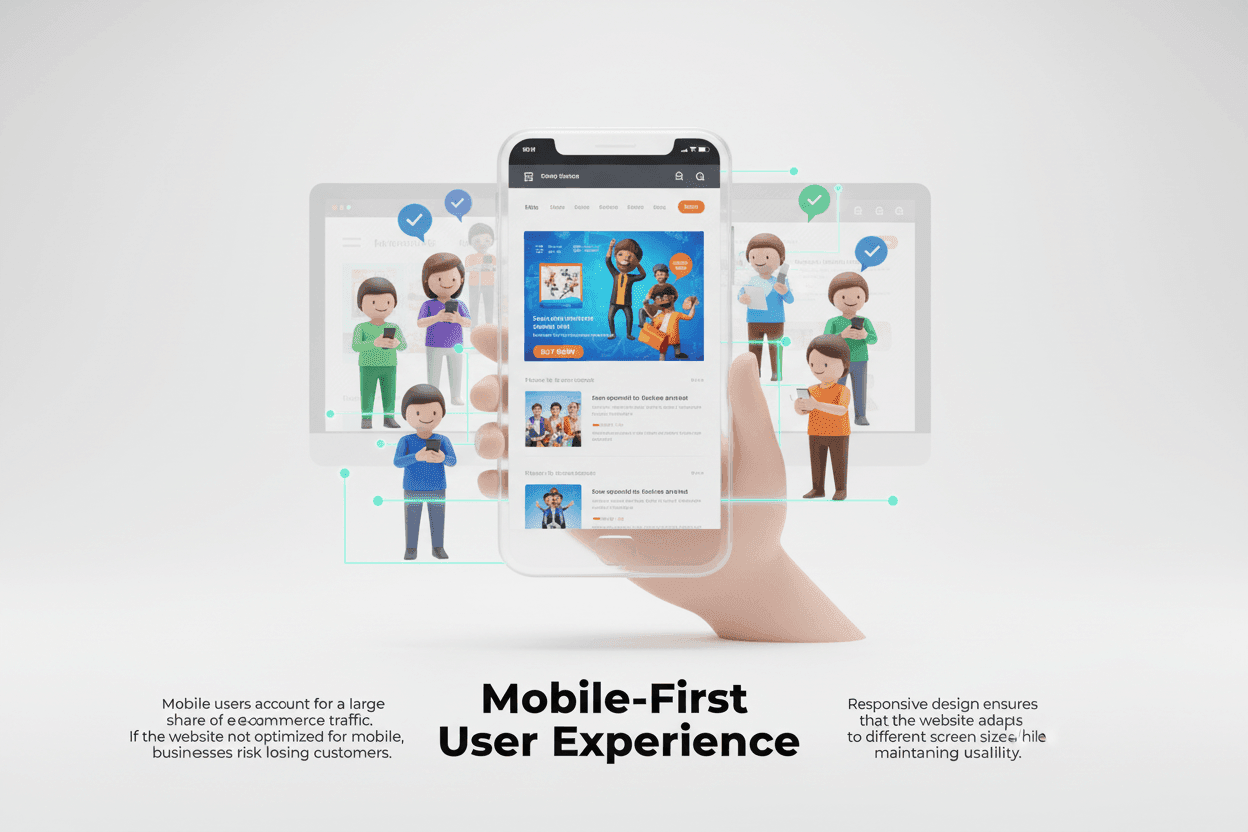
Ensure Mobile-First User Experience
Mobile users account for a large share of ecommerce traffic. If the website is not optimized for mobile, businesses risk losing customers.
Responsive design ensures that the website adapts to different screen sizes while maintaining usability.
Best practices include:
- Mobile-friendly layouts and navigation
- Touch-friendly buttons and interactions
- Fast loading speed on mobile devices
- Simplified content for smaller screens
A mobile-first approach improves accessibility and user satisfaction.
Improve Speed and Performance
Speed directly impacts user experience. Slow websites frustrate users and lead to higher bounce rates.
A professional web development company focuses on performance optimization to ensure fast loading times.
Key strategies include:
- Optimize images and media files
- Reduce unnecessary scripts and code
- Use caching and content delivery networks
- Improve server response time
Fast websites keep users engaged and improve conversion rates.
Use Visual Hierarchy to Guide Users
Visual hierarchy helps users understand where to focus their attention. It guides them through the page and highlights important elements.
Effective web development services ensure that design elements are used strategically to improve usability.
Best practices include:
- Use contrast to highlight key actions
- Keep layouts clean and uncluttered
- Prioritize important content above the fold
- Maintain consistent design patterns
A clear visual hierarchy makes navigation easier and improves user experience.
Build Trust Through Design and Content
Trust is essential in ecommerce. Users need to feel confident before making a purchase.
A professional web development agency incorporates trust elements throughout the website.
Key trust-building features include:
- Secure payment indicators
- Clear return and refund policies
- Customer reviews and testimonials
- Transparent pricing and shipping details
Trust reduces hesitation and encourages users to complete transactions.
Leverage Personalization for Better Engagement
Personalization enhances user experience by making content more relevant. Modern web development technologies enable businesses to tailor experiences based on user behavior.
Examples include:
- Product recommendations
- Personalized offers
- Recently viewed items
- Customized homepages
Personalization increases engagement and improves repeat purchases.
Closing Thought
User experience defines how users interact with your ecommerce website.
Every detail shapes their journey and decisions.
When UX is designed with clarity and purpose, it transforms visitors into customers and customers into loyal buyers.
"Great ecommerce experiences are built by making every interaction simple, intuitive, and meaningful."