

Front-End vs Back-End Development Explained
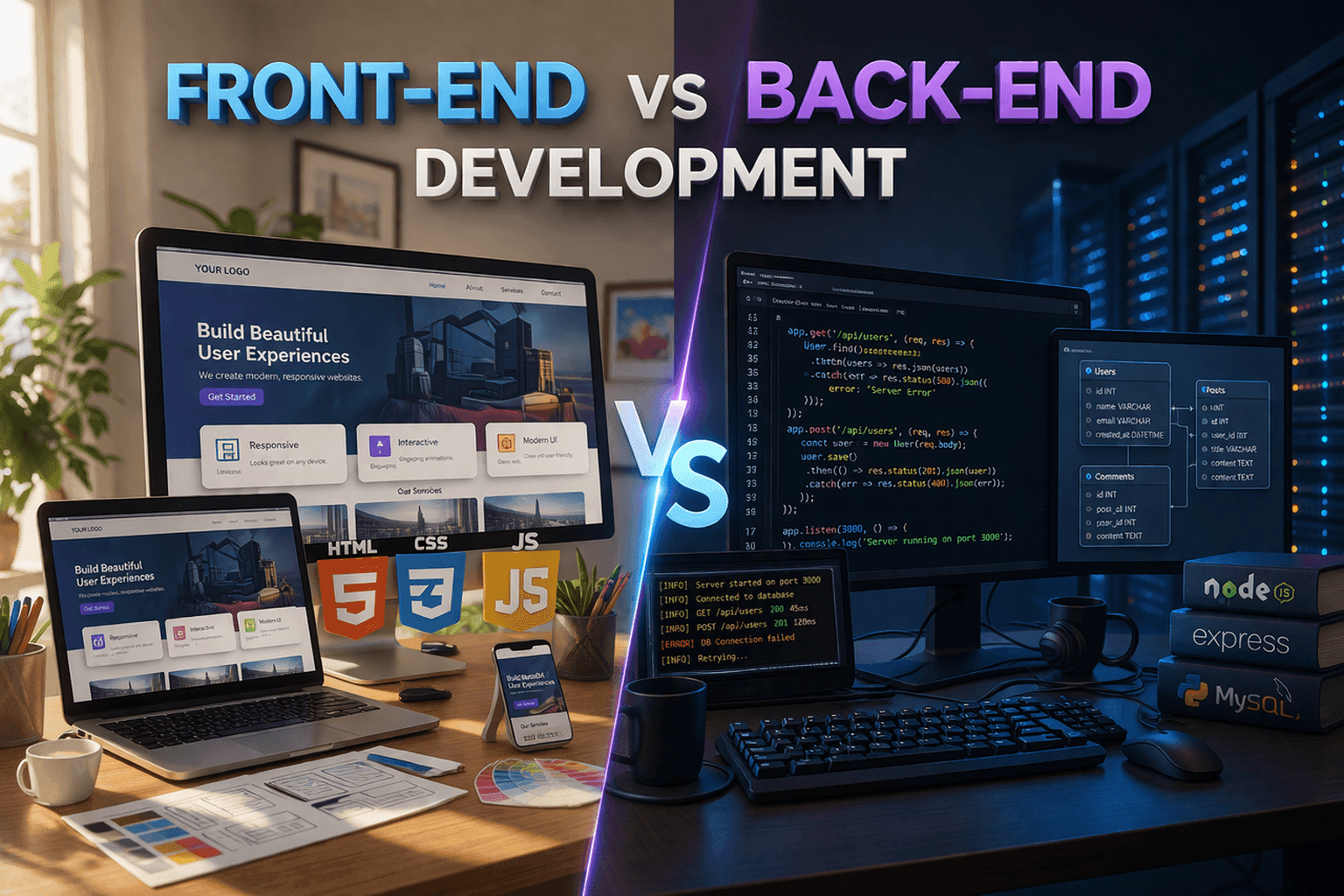
Websites today feel fast, interactive, and seamless—but behind every experience are two essential parts working together. Many businesses understand the need for a website but don’t fully know how development actually works.
This is where understanding web development services becomes important. Knowing the difference between front-end and back-end helps businesses make better decisions when working with a web development agency.
Understanding the Two Sides of Development
Web development is divided into two main areas: front-end and back-end. A professional web development company ensures both layers work together smoothly to deliver a complete digital experience.
Front-end focuses on what users see and interact with, while back-end manages data, logic, and system operations. When both sides are aligned, websites become faster, more reliable, and easier to use.
Front-End Shapes User Experience
Front-end development controls how a website looks and behaves. It directly impacts how users interact with your platform and how they perceive your brand.
- Handles layout, design, and visual elements
- Ensures responsiveness across devices
- Improves interaction through animations
- Focuses on speed and smooth navigation
Strong front-end development makes websites engaging and easy to use.
Back-End Powers Functionality
Back-end development works behind the scenes. It ensures that everything on the website functions correctly, from data handling to server operations.
- Manages databases and server logic
- Handles user authentication and security
- Processes requests and responses
- Ensures system performance and stability
A strong back-end makes sure the website runs efficiently without errors.

Technology Connects Both Layers
Modern web development technologies bridge the gap between front-end and back-end. Choosing the right stack ensures seamless communication between both layers.
Technologies like APIs, frameworks, and cloud systems allow data to flow smoothly while maintaining speed and security. This connection is what makes modern websites responsive, scalable, and reliable.
Both Sides Are Equally Important
Focusing only on design or only on functionality can create an incomplete product. Effective web development services ensure both front-end and back-end are balanced.
- Design attracts users, functionality retains them
- Speed depends on both layers working together
- Security relies on strong back-end systems
- User experience improves with smooth integration
Balanced development leads to better performance and results.
Closing Thought
A website is not just what users see.
It is also how everything works behind the scenes.
When front-end and back-end come together seamlessly, the experience feels simple, fast, and reliable.
"Great digital products are built when design and functionality work as one, not in isolation."