

Google Ads vs Meta Ads: Which Platform Works Better for Lead Generation?
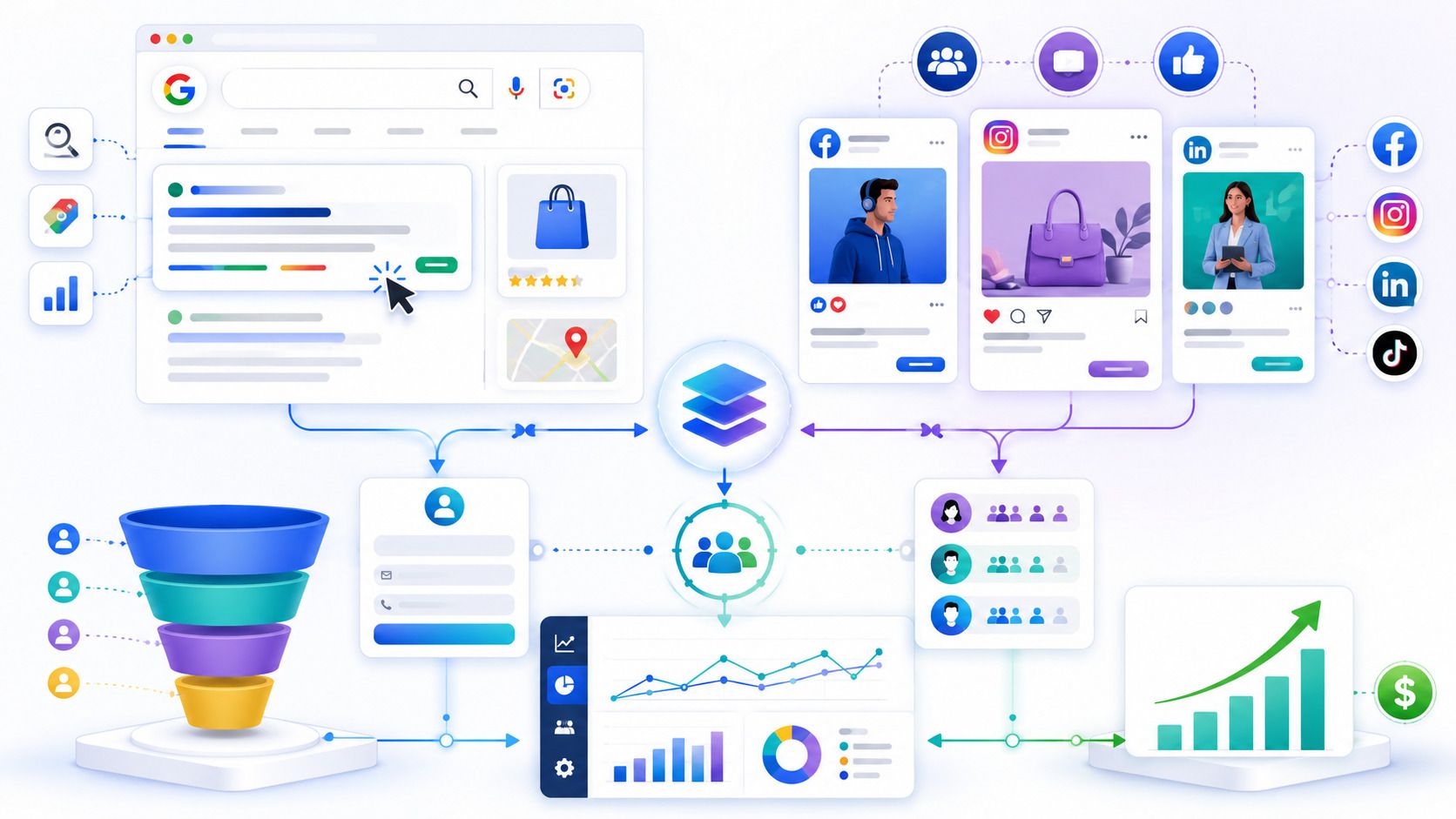
Lead generation is one of the biggest goals for businesses investing in digital marketing. Every company wants enquiries from the right people, at the right cost, with a better chance of conversion.
Google Ads and Meta Ads are two of the most used platforms for this purpose. Both can bring leads. But they work in very different ways.
Google Ads helps you reach people who are already searching for a product or service. Meta Ads helps you reach people based on their interests, behaviour, location, and online activity. One captures demand. The other creates demand.
So, which platform works better for lead generation? The answer depends on your business type, audience, budget, offer, and sales cycle.
What Are Google Ads?
Google Ads is a paid advertising platform that lets businesses show ads across Google Search, YouTube, Display Network, Gmail, Maps, and partner websites.
For lead generation, Google Search Ads are often the most valuable. These ads appear when people search for specific keywords.
For example, someone may search for:
Digital marketing agency near me
Best interior designers in San Francisco
Emergency plumbing services
B2B software development company
Real estate projects near me
These searches show intent. The user already has a need and is looking for a solution.
That makes Google Ads powerful for high-intent lead generation.
What Are Meta Ads?
Meta Ads allow businesses to advertise across Facebook, Instagram, Messenger, and Meta Audience Network.
Unlike Google Ads, Meta does not depend mainly on search intent. It uses audience targeting, interests, demographics, behaviour, lookalike audiences, custom audiences, and creative formats to reach potential customers.
Meta Ads work well when your product or service needs visual appeal, awareness, education, or repeated exposure.
For example, Meta Ads can work well for real estate, education, wellness, events, fashion, restaurants, coworking spaces, clinics, and lifestyle services.
The user may not be actively searching at that moment, but a strong ad can create interest and push them toward enquiry.
The Core Difference Between Google Ads and Meta Ads
The main difference is user intent.
Google Ads reaches users who are actively searching. Meta Ads reaches users who may be interested, even if they are not searching yet.
This changes how leads behave.
A Google lead may be closer to decision-making because the person searched for a solution. A Meta lead may need more nurturing because the person responded to an ad while browsing social media.
Neither is better in every situation. They serve different stages of the customer journey.
Which Platform Gives Better Lead Quality?
Google Ads often gives stronger lead quality for high-intent services.
When someone searches for a service, they usually have a clear need. They may compare providers, check pricing, and contact businesses quickly.
This makes Google Ads useful for:
Local services
B2B services
Healthcare enquiries
Legal and finance leads
Software services
Home improvement
High-value consultations
Emergency services
Meta Ads can also generate quality leads, but the campaign needs strong targeting, creative, and filtering questions.
Meta often brings higher lead volume at a lower cost. But not every lead may be ready to buy. Some may be curious, early-stage, or price-sensitive.
For better lead quality on Meta, businesses should use clear ad messaging, strong landing pages, qualification questions, and follow-up automation.
Which Platform Gives Lower Cost Per Lead?
Meta Ads usually produce a lower cost per lead compared to Google Ads.
This is because Meta has strong audience targeting and native lead forms. Users can submit details without leaving Facebook or Instagram. This reduces friction.
But low cost does not always mean better ROI.
A campaign that brings 100 low-cost leads may still perform poorly if only a few convert. A Google Ads campaign with fewer but higher-intent leads may bring better sales value.
The real metric should not be only cost per lead. Businesses should also track:
Lead quality
Response rate
Appointment rate
Sales conversion rate
Cost per qualified lead
Revenue per lead
Return on ad spend
A cheap lead is not useful if it does not move into a real sales conversation.
Which Platform Works Better for B2B Lead Generation?
For B2B lead generation, Google Ads often works better when users are actively searching for a service or solution.
A business searching for “CRM implementation company” or “performance marketing agency” already has a problem to solve. Google Ads can capture this demand at the right moment.
Meta Ads can support B2B campaigns too, but it usually works better for awareness, remarketing, webinars, downloadable resources, and founder-led content.
For B2B, Meta can warm up audiences before they convert through Google Search or direct website visits.
A strong B2B strategy often uses Google Ads for high-intent search and Meta Ads for awareness and remarketing.
Which Platform Works Better for Local Businesses?
Both platforms can work for local lead generation.
Google Ads is strong because users often search for services near them. Local intent searches can bring leads from people ready to call or visit.
Meta Ads is useful for local awareness. It can promote offers, events, launches, and services within a selected location radius.
For example, a salon, clinic, gym, restaurant, coworking space, or real estate brand can use Meta Ads to reach people in nearby areas.
For competitive markets, businesses offering Digital Marketing Services in San Francisco may use both Google Ads and Meta Ads to capture high-intent searches while building brand recall across social platforms.
Which Platform Converts Faster?
Google Ads usually converts faster because users are already searching with intent.
If the landing page is strong, users may call, fill a form, or book a consultation quickly.
Meta Ads usually needs more follow-up. Many users submit forms casually because the process is easy. Fast response is important. If the sales team delays follow-up, lead quality can drop.
Meta leads often convert better when businesses use:
Instant WhatsApp or call follow-up
Email nurturing
Retargeting ads
Strong offers
Qualification questions
Clear landing page journeys
Speed matters on both platforms, but it is especially important for Meta campaigns.
Landing Pages Matter More Than the Platform
Many businesses blame the ad platform when leads do not convert. But often, the landing page is the real issue.
A good landing page should have:
A clear headline
Strong service explanation
Trust signals
Reviews or proof points
Simple enquiry form
Fast loading speed
Mobile-friendly design
Clear call-to-action
Relevant offer
Google Ads traffic needs a page that matches search intent. Meta Ads traffic needs a page that quickly explains value and builds trust.
Without a strong landing page, both platforms can waste budget.
When Should You Choose Google Ads?
Choose Google Ads when your audience is actively searching for your service.
Google Ads is a good fit when:
Your service has clear search demand
You want high-intent leads
Your budget can support competitive keywords
You have a strong landing page
Your sales team can handle serious enquiries
You want measurable search-driven conversions
It is especially strong for businesses where users already know what they need.

When Should You Choose Google Ads?
Choose Google Ads when your audience is actively searching for your service.
Google Ads is a good fit when:
• Your service has clear search demand
• You want high-intent leads
• Your budget can support competitive keywords
• You have a strong landing page
• Your sales team can handle serious enquiries
• You want measurable search-driven conversions
It is especially strong for businesses where users already know what they need.
When Should You Choose Meta Ads?
Choose Meta Ads when your service needs awareness, visual storytelling, or audience education.
Meta Ads is a good fit when:
• You want lower-cost lead volume
• Your product or service is visually appealing
• You want to reach people before they search
• You have strong creatives
• You want to build remarketing audiences
• You are promoting offers, events, or launches
Meta is powerful when the creative makes people stop, understand, and act.
Best Strategy: Use Both Platforms Together
The best lead generation strategy often combines Google Ads and Meta Ads.
Meta Ads can create awareness and bring users into the funnel. Google Ads can capture users when they search later. Remarketing can bring back visitors who did not convert the first time.
For example:
• A user sees your Meta Ad
• They visit your website
• They leave without filling the form
• Later, they search for your service on Google
• Your Google Ad appears
• They return and submit an enquiry
This kind of journey is common. Customers rarely convert from one touchpoint.
Using both platforms gives your business wider reach and better conversion opportunities.
Final Thoughts
Google Ads and Meta Ads both work for lead generation, but they solve different problems.
Google Ads is better for capturing high-intent leads from people actively searching. Meta Ads is better for creating demand, building awareness, and generating affordable lead volume.
For better ROI, businesses should not choose based only on cost per lead. They should look at lead quality, conversion rate, follow-up speed, sales value, and long-term customer acquisition cost.
The strongest results usually come from a balanced strategy. Use Google Ads to capture intent. Use Meta Ads to build demand and remarket. Support both with strong landing pages, accurate tracking, and a fast sales follow-up system.
"“Google Ads captures people with active intent, while Meta Ads creates demand through smart targeting and strong creative storytelling.”"