

Landing Page Optimization: How to Convert More Paid Traffic into Leads
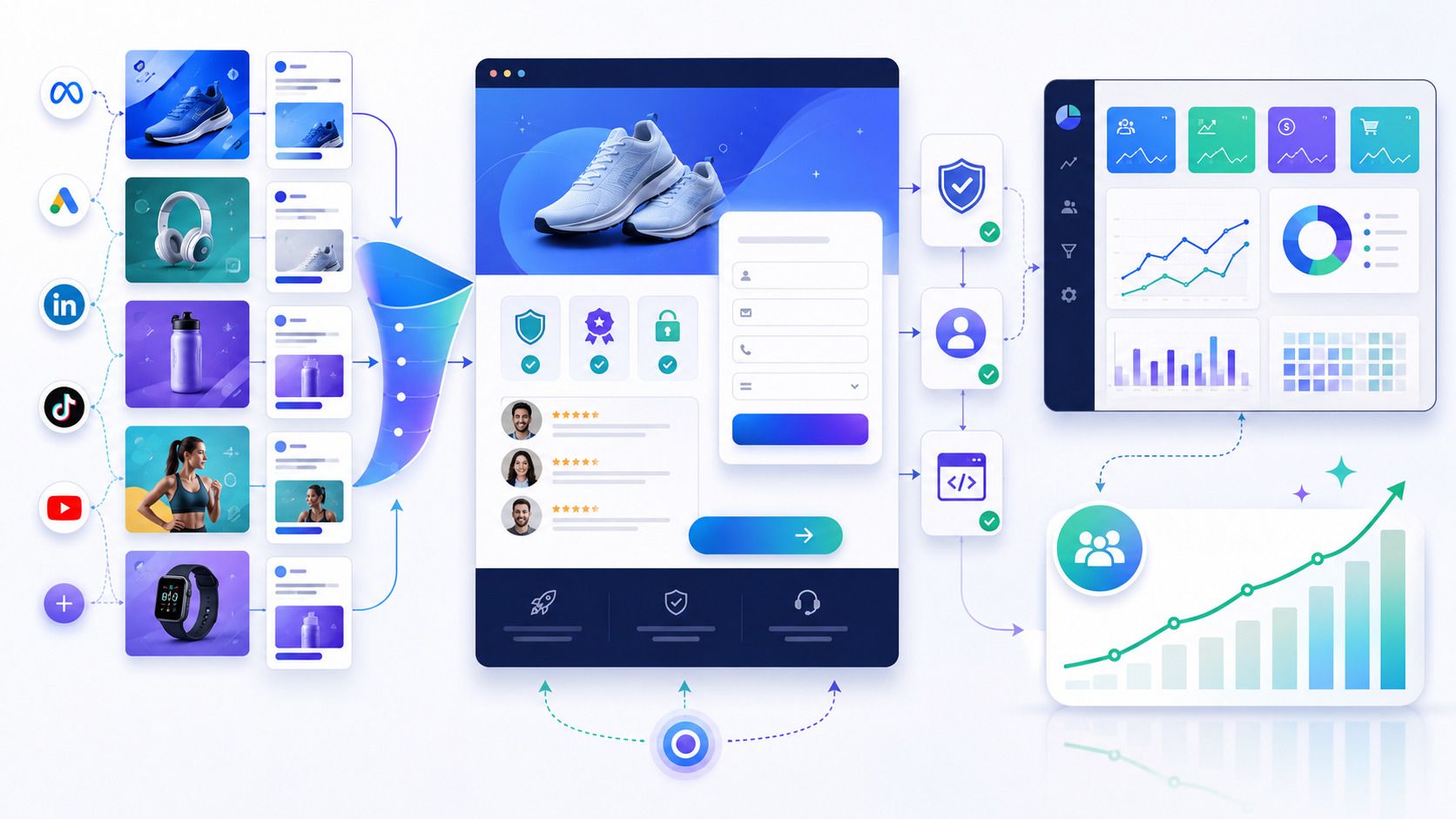
Paid ads can bring visitors to your website quickly. But traffic alone does not create business growth.
Many companies spend money on Google Ads, Meta Ads, LinkedIn Ads, or display campaigns, but still struggle to get enough quality leads. In most cases, the problem is not only the ad. The landing page also plays a major role.
A landing page decides what happens after the click. It tells visitors what you offer, why they should trust you, and what action they should take next.
When the page is clear, fast, and focused, more paid traffic turns into leads. When the page is confusing or slow, even a strong ad campaign can waste budget.
What Is Landing Page Optimization?
Landing page optimization is the process of improving a landing page so more visitors take action.
That action may be filling a form, calling your business, booking a consultation, downloading a guide, requesting a quote, or starting a chat.
The goal is simple. You want to increase conversions without increasing ad spend.
For example, if 1,000 people visit your landing page and 30 people submit enquiries, your conversion rate is 3%. If optimization improves that to 6%, you get double the leads from the same traffic.
That is why landing page optimization is one of the fastest ways to improve paid campaign ROI.
Why Landing Pages Matter for Paid Traffic
Paid traffic is different from regular website traffic.
Users arrive with specific expectations based on the ad they clicked. If your ad promises a service, offer, or solution, the landing page must continue that same message.
If the page feels unrelated, too general, or hard to understand, users leave quickly.
A strong landing page helps paid campaigns by:
• Reducing wasted clicks
• Improving conversion rates
• Lowering cost per lead
• Increasing lead quality
• Supporting better campaign ROI
• Giving users a focused journey
Businesses investing in Digital Marketing Services in San Jose can improve paid campaign performance by optimizing landing pages for local intent, clear service value, and faster lead actions.
Match the Landing Page With the Ad Message
Message match is one of the most important parts of landing page optimization.
The headline on the page should connect directly with the ad. If the ad talks about “lead generation services,” the page should not open with a generic company introduction.
Users should immediately feel they are in the right place.
For example:
Ad message: “Generate Qualified B2B Leads”
Landing page headline: “B2B Lead Generation Campaigns Built for Better Enquiries”
This keeps the journey smooth.
When the ad and landing page match, visitors are more likely to stay, read, and convert.
Keep the Page Focused on One Goal
A landing page should not try to do everything.
Many businesses send paid traffic to a homepage. This often reduces conversions because homepages have many links, sections, menus, and distractions.
A landing page should focus on one main action.
That action may be:
• Book a free consultation
• Request a quote
• Schedule a demo
• Download a guide
• Call now
• Submit an enquiry
Every section should support that action.
Too many options can confuse visitors. One clear path usually performs better.
Write a Strong Hero Section
The hero section is the first part users see. It must explain value quickly.
A good hero section should include:
• A clear headline
• A short supporting line
• A strong CTA
• A trust signal
• A relevant visual
• A simple form or button
Avoid vague headlines like “Grow Your Business Today.” They do not explain what the user gets.
Use specific benefit-led messaging instead.
For example:
“Convert More Paid Traffic into Qualified Leads”
This tells users exactly what the page is about.
Use Simple and Clear Copy
Landing page copy should be easy to read.
Paid traffic users do not spend time decoding complex content. They scan fast. They want to understand the offer quickly.
Use short paragraphs, simple words, and clear subheadings.
The copy should answer:
• What do you offer?
• Who is it for?
• What problem does it solve?
• Why should the visitor trust you?
• What should they do next?
Good landing page copy feels direct. It does not over-explain. It guides the user toward action.
Show Trust Signals Early
People do not submit details unless they feel confident.
Trust signals help reduce hesitation. They show that your business is credible and experienced.
Useful trust signals include:
• Client logos
• Testimonials
• Case study results
• Review ratings
• Certifications
• Years of experience
• Project counts
• Industry expertise
• Security or privacy notes
For paid traffic, trust signals should appear early on the page. Do not hide them near the bottom.
A visitor should see proof before they reach the form.
Make Forms Short and Useful
Forms can improve or reduce conversion rates.
A long form may discourage users. A very short form may bring low-quality leads.
The right form depends on the campaign goal.
For high-volume lead generation, keep the form short. Ask for name, phone, email, and service need.
For premium or B2B services, add one or two qualification questions. This helps filter serious prospects.
Good qualification questions include:
• What service are you looking for?
• What is your monthly budget?
• When do you want to start?
• What is your business location?
The form should feel easy, not tiring.
Improve Page Speed
Page speed directly affects paid campaign performance.
If a landing page loads slowly, users leave before seeing the offer. This wastes ad spend and increases cost per lead.
A good landing page should load fast on mobile and desktop.
Improve speed by:
• Compressing images
• Removing unnecessary scripts
• Using lightweight design
• Avoiding heavy animations
• Optimizing videos
• Using clean code
• Testing mobile performance
Even a few seconds of delay can reduce conversions.
Design for Mobile First
Most paid traffic comes from mobile devices, especially from Meta Ads, Instagram, YouTube, and local search campaigns.
A landing page must be easy to use on small screens.
Mobile-friendly landing pages should have:
• Clear headline above the fold
• Tap-friendly buttons
• Short sections
• Easy-to-fill forms
• Click-to-call option
• Fast loading speed
• No cluttered layouts
If the mobile experience is poor, campaigns will lose leads.
Use Strong Calls to Action
A CTA tells users what to do next.
Generic CTAs like “Submit” or “Learn More” may not always perform well. Strong CTAs are clear, action-focused, and relevant to the offer.
Examples include:
• Book Your Free Strategy Call
• Request a Campaign Audit
• Get a Custom Growth Plan
• Talk to a Lead Generation Expert
• Check Your Landing Page Performance
The CTA should appear more than once on the page, especially after important sections.
Add Social Proof and Results
Paid traffic visitors often compare multiple brands.
Social proof helps your business stand out. It shows that other clients have trusted you and received value.
You can include:
• Short testimonials
• Before-and-after results
• Campaign performance snapshots
• Industry-specific case studies
• Client success stories
Use specific proof where possible. For example, “Reduced CPL by 32%” is stronger than “Improved performance.”
Real proof builds confidence faster than general claims.
Track Every Conversion Properly
Landing page optimization is incomplete without tracking.
You need to know which ads, keywords, audiences, and landing pages bring leads.
Track actions such as:
• Form submissions
• Phone calls
• WhatsApp clicks
• Button clicks
• Demo bookings
• Downloads
• Chat enquiries
Also track lead quality after submission. This helps you understand which campaigns bring real opportunities, not just form fills.
Test and Improve Regularly
The first version of a landing page is rarely the best version.
Regular testing helps improve performance.
You can test:
• Headlines
• CTA text
• Form length
• Hero visuals
• Trust signals
• Offers
• Page layout
• Button placement
• Testimonials
• Pricing visibility
Small changes can make a big difference. A better headline or shorter form can reduce cost per lead without increasing ad budget.
Final Thoughts
Landing page optimization helps businesses get more value from paid traffic.
Ads bring visitors. Landing pages convert them.
A strong landing page should match the ad message, load fast, build trust, explain value clearly, and guide users toward one focused action.
Businesses that improve landing pages often generate more leads from the same ad spend. They also improve lead quality, reduce wasted clicks, and build better ROI from paid campaigns.
For stronger results, treat landing pages as part of the campaign, not as an afterthought. The better the page, the harder your paid traffic works.
"“Paid traffic becomes profitable only when the landing page gives visitors a clear reason to trust, act, and convert.”"