

SEO vs Paid Ads: Which Channel Should Your Business Invest In First?
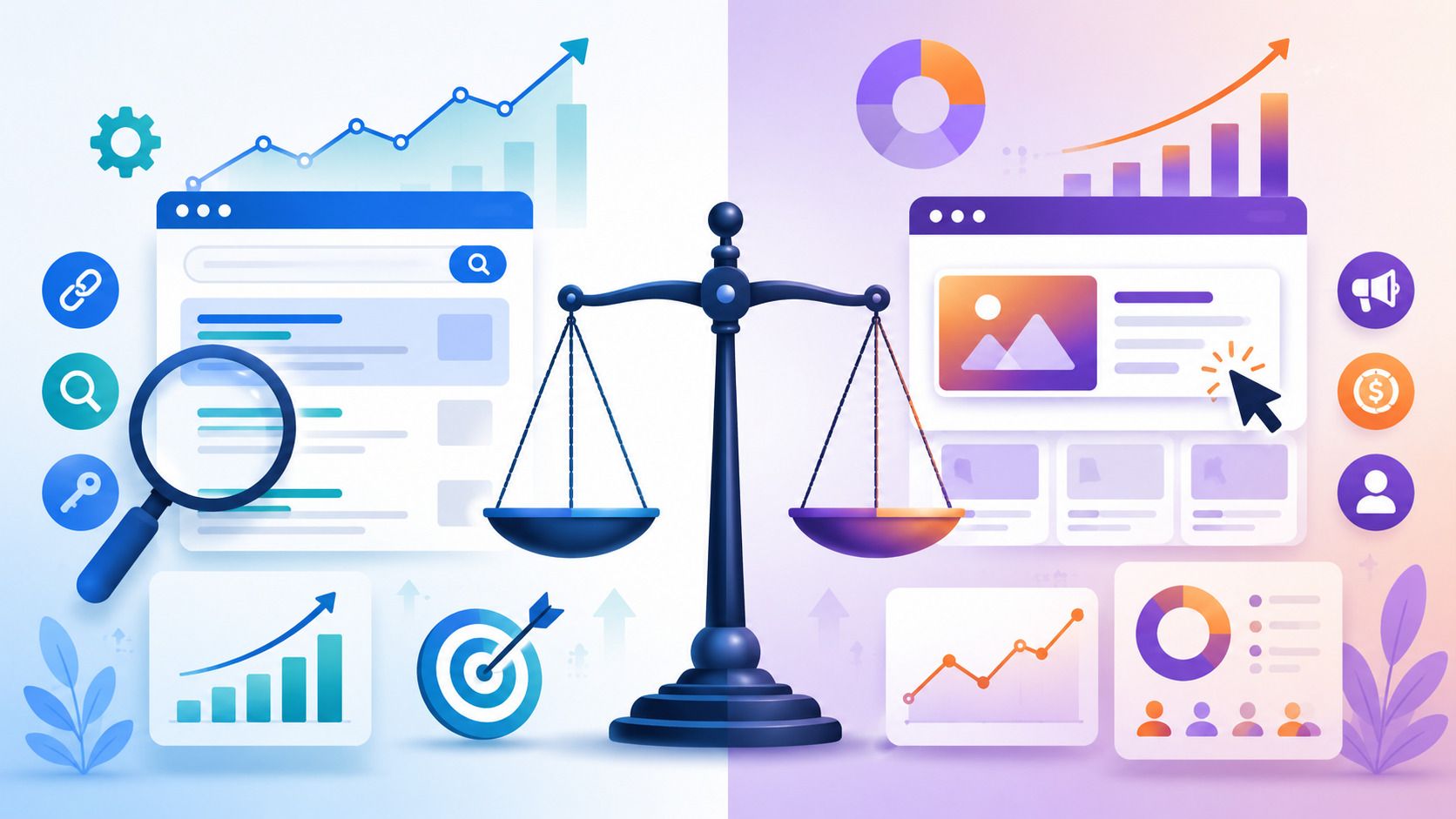
Every business wants more visibility, better leads, and faster growth. The real question is where to start. Should you invest in SEO and build long-term organic traffic? Or should you start with paid ads to bring quick enquiries?
Both channels can support business growth, but they work in different ways. SEO builds search visibility over time. Paid ads help you reach people faster through sponsored campaigns. The right choice depends on your budget, timeline, competition, business stage, and lead generation goals.
For most businesses, the best answer is not SEO or paid ads. It is knowing which one should come first and how both can work together.
What Is SEO?
SEO stands for search engine optimization. It is the process of improving your website so it ranks better on search engines like Google.
When people search for your services, SEO helps your website appear in organic search results. These results are not paid placements. They are earned through relevance, content quality, technical performance, authority, and user experience.
SEO includes several activities such as:
• Keyword research
• On-page optimization
• Technical SEO
• Local SEO
• Content creation
• Link building
• Website speed improvement
• User experience updates
• Google Business Profile optimization
SEO is useful for businesses that want steady visibility, trust, and long-term traffic.
What Are Paid Ads?
Paid ads help businesses appear in front of customers by paying for ad placements. These ads may appear on Google, YouTube, Instagram, Facebook, LinkedIn, display networks, or other digital platforms.
Paid ads are commonly used for lead generation, brand awareness, product sales, app installs, event promotions, and remarketing.
Popular paid ad channels include:
• Google Search Ads
• Meta Ads
• LinkedIn Ads
• YouTube Ads
• Display Ads
• Remarketing Ads
• Shopping Ads
Unlike SEO, paid ads can start bringing traffic soon after campaigns go live. But once the budget stops, the traffic usually stops too.
SEO vs Paid Ads: The Main Difference
The biggest difference between SEO and paid ads is speed and sustainability.
SEO takes time, but it can create long-term value. Paid ads work faster, but they need continuous spending.
SEO helps your business earn visibility. Paid ads help your business buy visibility.
Both are useful. The decision depends on what your business needs first.
When Should a Business Invest in SEO First?
SEO is a smart first investment when your business wants long-term growth and does not need instant leads overnight.
It is also a strong choice when your customers search online before making decisions. If people are actively searching for your services, SEO helps you appear during those important moments.
1. You Want Long-Term Organic Visibility
SEO can keep bringing traffic even after the content is published and optimized. A strong service page or blog can continue attracting visitors for months or years with the right updates.
This makes SEO valuable for businesses that want stable growth instead of depending only on monthly ad spend.
2. Your Website Needs Better Structure
Many businesses run paid ads to weak websites. The result is poor conversion.
If your website has unclear service pages, slow loading speed, weak content, or poor mobile experience, SEO work can improve the foundation first.
Good SEO also improves how users experience your website.
3. Your Market Has Strong Search Demand
If your customers are searching for your services on Google, SEO should be part of your growth plan.
For example, clinics, real estate businesses, legal firms, SaaS companies, ecommerce brands, education providers, and professional service companies can benefit from SEO because people research these services before taking action.
4. You Want to Build Trust
Many users trust organic search results because they are not marked as ads. Ranking well can improve brand credibility, especially when supported by useful content, reviews, case studies, and strong service pages.
SEO helps your business show up as a helpful answer, not only as a promotion.
When Should a Business Invest in Paid Ads First?
Paid ads are useful when your business needs faster visibility, testing, or lead generation.
If your website is ready and your offer is clear, paid ads can help bring targeted traffic quickly.
1. You Need Leads Quickly
SEO takes time. Paid ads can bring enquiries faster when campaigns are set up properly.
This is useful for new launches, seasonal campaigns, event promotions, limited-time offers, or businesses that need immediate lead flow.
2. You Want to Test Offers and Landing Pages
Paid ads help you test different messages, audiences, locations, and landing pages quickly.
You can learn which headlines work, which services attract interest, which locations perform better, and which audience segments are more likely to convert.
These insights can also improve your SEO and content strategy.
3. You Are Entering a Competitive Market
If competitors already dominate organic search results, SEO may take time to show results. Paid ads can help you appear at the top while your SEO builds in the background.
This is useful for businesses entering crowded markets.
4. You Have a Clear Budget and Conversion Tracking
Paid ads work best when budgets, goals, landing pages, and tracking systems are clear.
If you know your cost per lead, conversion rate, and sales value, paid ads can become a measurable growth channel.
SEO vs Paid Ads: Which Gives Better ROI?
There is no single answer. ROI depends on business type, campaign quality, competition, website performance, and sales process.
SEO can deliver stronger long-term ROI because organic traffic does not require payment for every click. But it takes time to build.
Paid ads can deliver faster ROI when campaigns are well targeted and landing pages convert well. But costs can increase over time, especially in competitive industries.
A business should not compare SEO and paid ads only by traffic. The better question is:
Which channel brings better leads at the right cost and supports business goals?

Why Website Quality Matters for Both Channels
Many businesses ask whether SEO or paid ads is better, but they forget the website.
Both channels send users to your website. If the website is weak, both channels can fail.
Your website should have:
• Clear service pages
• Fast loading speed
• Mobile-friendly design
• Strong CTAs
• Trust signals
• Testimonials
• Case studies
• Simple contact forms
• Helpful content
• Proper tracking
A good website improves SEO rankings and paid ad conversions. Before increasing marketing spend, businesses should review their website experience.
Should New Businesses Start With SEO or Paid Ads?
New businesses often need faster visibility. Paid ads can help generate early traffic and leads. But SEO should not be ignored.
A practical approach is to start paid ads for faster enquiries while building SEO in the background.
This gives the business short-term lead flow and long-term organic growth.
For example:
• Use paid ads to generate immediate enquiries
• Build SEO-focused service pages for long-term ranking
• Publish blogs to answer customer questions
• Improve Google Business Profile for local visibility
• Use ad data to understand high-performing keywords
• Use SEO content to reduce future dependence on ads
This balanced approach works better than depending on only one channel.
Should Established Businesses Choose SEO First?
Established businesses often have existing website traffic, brand recognition, and customer data. For them, SEO can be a strong growth lever.
If the website already has service pages, blogs, backlinks, and some rankings, SEO improvements can produce strong results.
However, paid ads can still support specific goals such as new service launches, retargeting, location campaigns, or competitor campaigns.
For established businesses, SEO usually strengthens long-term authority, while paid ads support faster campaign goals.
How SEO and Paid Ads Work Better Together
SEO and paid ads are stronger when they support each other.
Paid ads can reveal which keywords, offers, and landing pages perform well. SEO can use this data to create better content and service pages.
SEO can reduce long-term dependence on paid traffic. Paid ads can support visibility while SEO rankings grow.
Together, they help businesses cover more search results, improve brand recall, and guide users across the decision journey.
A customer may first see a paid ad, later read a blog, compare service pages, see a remarketing ad, and then submit an enquiry. This is how modern digital marketing works.
Common Mistakes Businesses Make
Many businesses struggle because they treat SEO and paid ads as separate activities.
Common mistakes include:
• Running ads without proper landing pages
• Expecting SEO to work instantly
• Stopping paid ads before enough data is collected
• Not tracking conversions
• Targeting broad keywords without intent
• Sending all traffic to the homepage
• Ignoring mobile experience
• Creating content without keyword research
• Measuring clicks instead of lead quality
Avoiding these mistakes can improve both performance and cost efficiency.
How to Decide Which Channel Comes First
Before choosing SEO or paid ads, ask these questions:
• Do you need leads immediately?
• Is your website ready to convert visitors?
• Are people searching for your services?
• What is your monthly marketing budget?
• How competitive is your industry?
• Do you have a long-term growth plan?
• Can you track calls, forms, and leads properly?
• Do you already have useful content and service pages?
If speed is the priority, start with paid ads.
If long-term visibility is the priority, start with SEO.
If growth is the priority, use both with a clear plan.
How BrandStory Helps Businesses Choose the Right Channel
BrandStory helps businesses build practical digital marketing strategies based on goals, competition, audience behavior, and growth stage. The team studies your website, market position, search demand, paid media opportunities, and conversion gaps before recommending the right channel mix.
For a business searching for a Digital Marketing Company in Los Angeles, the right strategy may include SEO, paid ads, landing page optimization, local search visibility, content marketing, and performance tracking.
The focus is not only on clicks or rankings. The focus is on better visibility, stronger lead quality, and measurable growth.
Conclusion
SEO and paid ads both have value. SEO builds long-term search visibility, trust, and organic traffic. Paid ads create faster reach, quicker testing, and immediate campaign visibility.
The best channel to invest in first depends on your business goal. If you need leads quickly, paid ads may be the first step. If you want long-term growth, SEO should be a priority. In many cases, the smartest approach is to use paid ads for short-term demand while building SEO for long-term stability.
A clear strategy helps both channels work together and supports better business growth.
"SEO builds long-term visibility, while paid ads create faster reach. The right choice depends on your goals, budget, timeline, and growth stage."