

SEO vs SEM vs PPC
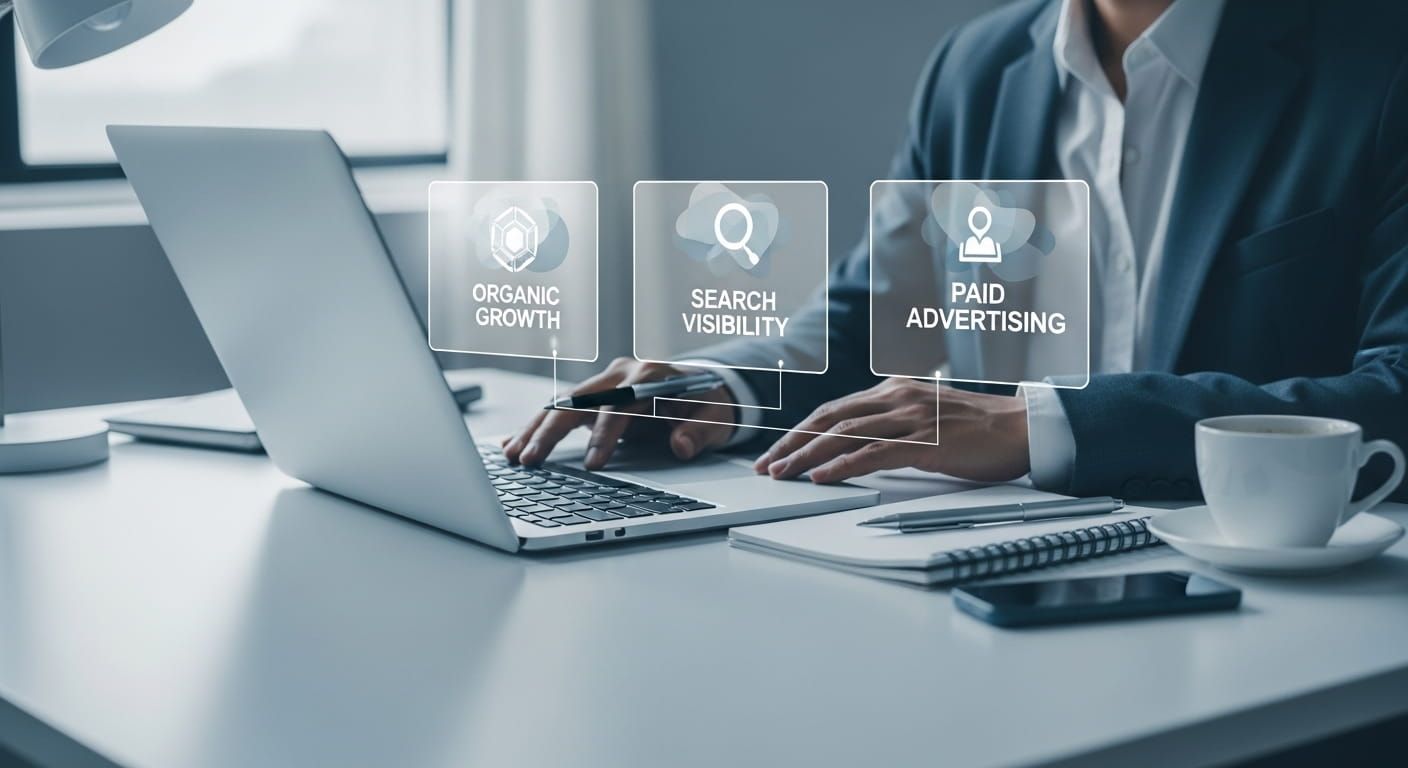
Businesses often confuse SEO, SEM, and PPC. While they all help drive traffic, they work in very different ways and deliver different outcomes.
Choosing the wrong channel leads to wasted budget and slow growth. A clear understanding helps you allocate resources effectively and build a balanced marketing strategy.
Search platforms like Google now combine organic and paid results, while AI systems such as ChatGPT and Perplexity AI surface information differently. This makes it even more important to understand how each channel contributes to visibility.
If you want a complete overview of how SEO fits into long-term growth, refer to the Ultimate SEO Guide , which explains how organic visibility builds sustainable results.
What is SEO
SEO (Search Engine Optimization) focuses on improving your website’s visibility in organic search results. It helps your content appear naturally when users search for relevant topics.
SEO is a long-term strategy that builds authority, trust, and consistent traffic.
Key characteristics of SEO:
- Focuses on organic (non-paid) traffic
- Builds long-term visibility
- Relies on content, technical optimization, and authority
- Requires consistent effort and updates
Search engines use NLP, Machine Learning, and Knowledge Graphs to evaluate content. This means SEO is now driven by intent, structure, and topical depth.
To understand how SEO works in detail, explore What is SEO and how it works.
What is SEM
SEM (Search Engine Marketing) is a broader strategy that includes both organic and paid search efforts.
It combines:
SEO (organic traffic)
PPC (paid advertising)
SEM focuses on maximizing visibility in search engines by using both strategies together.
Key characteristics of SEM:
- Includes both organic and paid strategies
- Provides immediate and long-term results
- Requires budget allocation and strategy planning
- Focuses on overall search visibility
SEM helps businesses dominate search results by appearing in both paid and organic sections.
To understand how rankings influence visibility, refer to how search engines rank websites.
What is PPC
PPC (Pay-Per-Click) is a paid advertising model where businesses pay for each click on their ads.
These ads appear at the top or bottom of search results and are marked as sponsored.
Key characteristics of PPC:
- Delivers immediate traffic
- Requires budget for each click
- Allows precise targeting
- Works well for short-term campaigns
Google Ads is one of the most common PPC platforms. Businesses use it to generate leads quickly while SEO builds long-term visibility.
To understand how performance is measured, refer to SEO KPIs to track

Key Differences Between SEO, SEM, and PPC
While SEO, SEM, and PPC all aim to increase visibility, their approach, cost structure, and outcomes are different.
SEO
- Organic traffic
- Long-term results
- Builds authority over time
- No direct cost per click
SEM
- Combines SEO and PPC
- Balanced short-term and long-term strategy
- Requires both budget and content investment
PPC
- Paid traffic
- Immediate results
- Cost per click model
- Stops when budget stops
The key difference lies in sustainability. SEO builds long-term growth, while PPC delivers quick visibility.
To understand how organic rankings are achieved, refer to SEO ranking factors in 2026.
When to Use SEO, SEM, and PPC
Each strategy serves a different purpose depending on business goals.
Use SEO when:
- You want long-term growth
- You aim to build authority in your niche
- You want consistent organic traffic
Use PPC when:
- You need immediate leads
- You are launching a new product or campaign
- You want precise audience targeting
Use SEM when:
- You want a balanced strategy
- You need both quick results and long-term growth
- You are scaling across multiple markets
The most effective approach is often a combination of all three.
How SEO, SEM, and PPC Work Together
SEO, SEM, and PPC are not competing strategies. They work best when used together as part of a unified growth plan.
Each channel plays a specific role:
- PPC drives immediate traffic and quick visibility
- SEO builds long-term authority and sustainable growth
- SEM combines both to maximize overall search presence
For example, PPC campaigns can generate instant leads while SEO strengthens organic rankings over time. Insights from SEO, such as high-performing keywords, can also improve PPC targeting and campaign efficiency.
A strong strategy uses PPC for short-term wins and SEO for long-term scalability. Search engines like Google often display both paid and organic results on the same page. When your business appears in both, it increases visibility, builds trust, and improves overall click-through rates.
Common Mistakes Businesses Make
Many businesses fail to get results because they misuse these channels.
Common mistakes include:
- Relying only on PPC without building SEO
- Expecting instant results from SEO
- Not aligning campaigns with search intent
- Poor budget allocation in SEM
- Ignoring data and performance metrics
These mistakes reduce ROI and limit growth potential.
How to Choose the Right Strategy
Choosing the right approach depends on your business goals, timeline, and available budget. A clear understanding of these factors helps you decide the right balance between SEO and paid channels.
Consider:
- Short-term vs long-term goals
- Available budget for paid campaigns
- Competitive landscape
- Content and technical readiness
Businesses that invest only in PPC often face rising costs. Businesses that rely only on SEO may take longer to scale.The best strategy is to combine both based on your growth stage.
Conclusion
SEO, SEM, and PPC each play a unique role in driving visibility and growth. Understanding their differences helps you build a balanced and effective strategy.
SEO builds long-term authority. PPC delivers immediate results. SEM combines both to maximize impact.
Businesses that align these strategies with clear goals achieve better performance and sustainable growth.
"Growth happens when short-term wins and long-term strategy work together."