

How to Measure Digital Marketing ROI Across SEO, Ads, Social, and Email
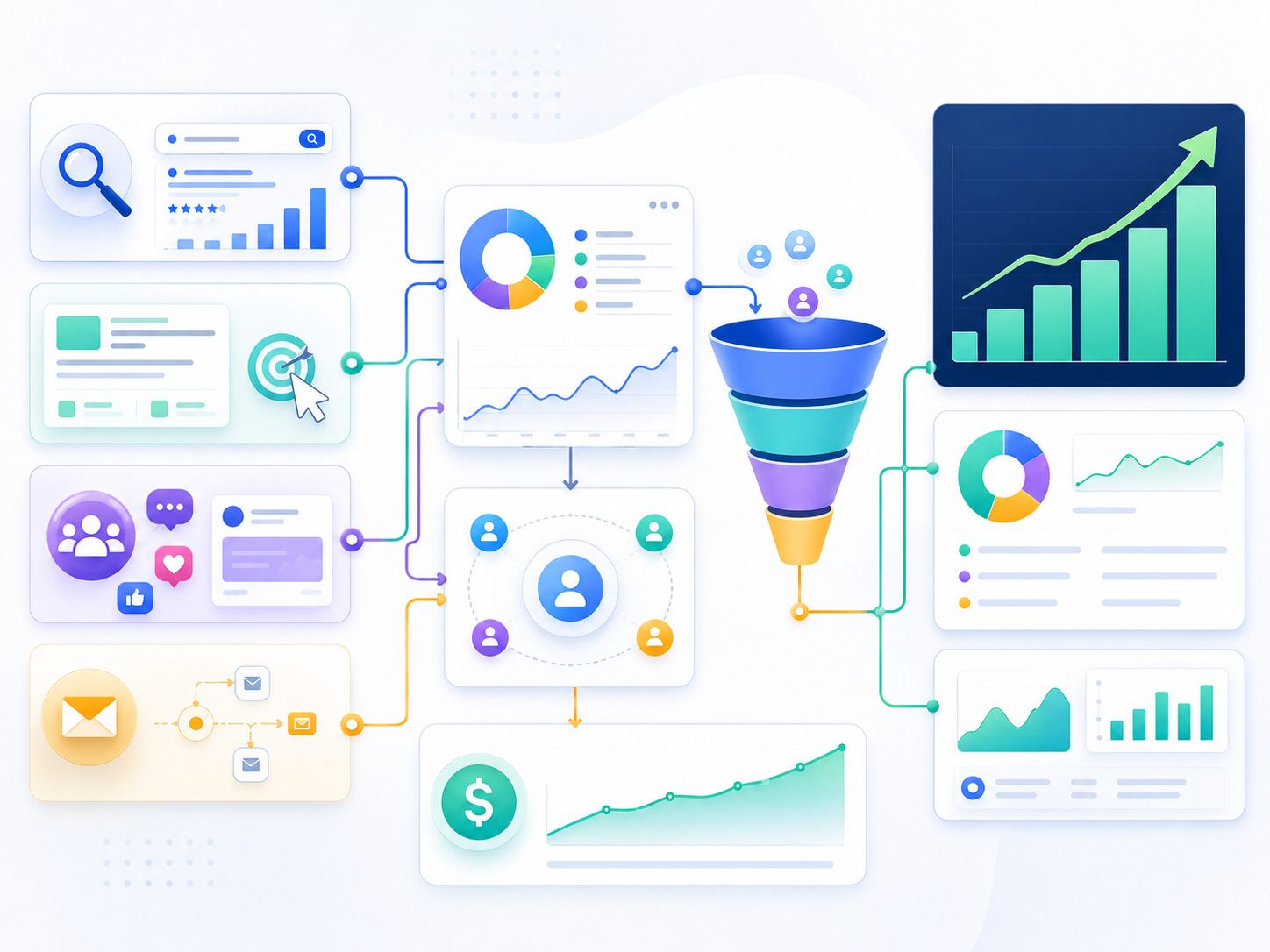
Digital marketing works best when businesses know what each channel is contributing. SEO may bring long-term traffic. Paid ads may generate fast leads. Social media may build trust and awareness. Email may help convert and retain customers.
But without proper ROI measurement, it becomes difficult to know where to invest more and where to improve.
Many businesses look only at traffic, clicks, followers, or email opens. These numbers are useful, but they do not always show business value. Digital marketing ROI should connect marketing activity with leads, sales, revenue, and customer growth.
What Is Digital Marketing ROI?
Digital marketing ROI measures the return a business gets from its online marketing investment.
A simple formula is:
ROI = Revenue from marketing minus marketing cost, divided by marketing cost
For example, if a business spends $5,000 on marketing and earns $20,000 in revenue from those campaigns, the ROI is strong.
But digital marketing ROI is not always simple. Some channels support direct sales. Others support awareness, trust, nurturing, and repeat engagement. This is why ROI should be measured across the full customer journey.
Why Measuring ROI Across Channels Matters
Customers rarely convert from one touchpoint.
A person may first discover your business on social media, later search for your service on Google, read a blog, click a paid ad, join your email list, and finally submit an enquiry.
If you only measure the final click, you may miss the value of earlier channels.
A business using Digital Marketing Services in Phoenix can measure ROI more clearly by tracking how SEO, ads, social media, and email work together to attract, nurture, and convert customers.
This gives a more complete view of marketing performance.
Start With Clear Business Goals
Before measuring ROI, define what success means.
For some businesses, the goal is lead generation. For others, it may be online sales, booked appointments, phone calls, demo requests, store visits, subscriptions, or repeat purchases.
Your ROI tracking should match your business model.
Common goals include:
• More qualified leads
• Lower cost per lead
• Higher website conversion rate
• Better sales opportunities
• Increased online revenue
• Improved repeat purchases
• Lower customer acquisition cost
• Higher customer lifetime value
Clear goals make reporting more useful.
Set Up Proper Conversion Tracking
ROI cannot be measured without tracking.
Every important customer action should be tracked across your website, ads, email campaigns, CRM, and landing pages.
Important conversions include:
• Form submissions
• Phone calls
• WhatsApp clicks
• Demo bookings
• Quote requests
• Purchases
• Newsletter signups
• Brochure downloads
• Appointment bookings
• Add-to-cart actions
Tools like GA4, Google Tag Manager, ad platform pixels, CRM systems, and call tracking can help capture these actions.
Without proper tracking, ROI reporting becomes guesswork.
Measuring SEO ROI
SEO ROI is often long-term. It may not show immediate returns like paid ads, but it can become one of the strongest growth channels over time.
To measure SEO ROI, track both visibility and business outcomes.
Important SEO metrics include:
• Organic traffic
• Keyword rankings
• Search impressions
• Organic click-through rate
• Organic leads
• Organic sales
• Top landing pages
• Assisted conversions
• Backlink growth
• Local search visibility
The most important question is not only whether rankings improved. The real question is whether organic traffic is bringing qualified leads or revenue.
SEO content may also support other channels. A blog may help educate a lead before they convert through email or remarketing.
Measuring Paid Ads ROI
Paid advertising is easier to measure because spend and conversions are more direct.
Platforms like Google Ads, Meta Ads, LinkedIn Ads, and YouTube Ads show campaign-level performance. But businesses should avoid judging ads only by clicks or impressions.
Important paid ads metrics include:
• Ad spend
• Click-through rate
• Cost per click
• Conversion rate
• Cost per lead
• Cost per qualified lead
• Return on ad spend
• Landing page conversion rate
• Sales conversion rate
• Revenue from campaigns
Paid ads ROI should be measured beyond lead volume. A campaign that brings fewer but better leads may be more profitable than one that brings many weak enquiries.
Measuring Social Media ROI
Social media ROI can be harder to measure because its role is often broader.
Social media supports awareness, trust, engagement, community, traffic, lead generation, and remarketing. Some conversions may happen later through other channels.
Important social media metrics include:
• Reach
• Engagement rate
• Saves and shares
• Profile visits
• Website clicks
• Direct messages
• Lead form submissions
• Cost per lead from paid social
• Assisted conversions
• Follower quality
• Video watch time
For organic social media, ROI should include trust-building and traffic contribution. For paid social, ROI can be measured through leads, sales, remarketing conversions, and cost per result.
The key is to connect social activity with website visits and lead actions.

Measuring Email Marketing ROI
Email marketing often delivers strong ROI because it reaches people who already know your brand.
Email supports lead nurturing, customer retention, repeat purchases, abandoned cart recovery, event follow-ups, and re-engagement.
Important email marketing metrics include:
• Open rate
• Click-through rate
• Reply rate
• Conversion rate
• Revenue from email
• Lead nurturing engagement
• Unsubscribe rate
• Customer retention rate
• Repeat purchase rate
• Sales from automation workflows
Open rate is useful, but it should not be the main measure. Clicks, replies, conversions, and revenue show stronger business value.
Email ROI improves when campaigns are segmented, personalized, and connected to CRM data.
Understand Direct ROI and Assisted ROI
Not every channel creates direct conversions.
Some channels assist the buyer journey.
Direct ROI comes from channels that generate the final conversion. Assisted ROI comes from channels that influence the customer before they convert.
For example:
• SEO blog introduces the user to your brand
• Social media builds trust
• Paid ad brings the user back
• Email nurtures the lead
• Sales team closes the deal
In this case, the final lead may come from paid ads, but SEO, social, and email all supported the decision.
This is why attribution matters.
Use Attribution Models Carefully
Attribution helps show which channels influence conversions.
Common attribution views include:
• First-touch attribution
• Last-touch attribution
• Linear attribution
• Data-driven attribution
• Assisted conversions
• Multi-channel path analysis
Last-touch attribution is useful, but it can undervalue awareness and nurturing channels. First-touch attribution shows discovery, but may miss final conversion influence.
A balanced view helps businesses understand the full journey better.
Connect Marketing Data With Sales Data
Marketing ROI becomes more accurate when connected to sales outcomes.
A campaign may generate leads, but sales data shows whether those leads became customers.
Connect your marketing tools with CRM data to track:
• Lead source
• Lead quality
• Sales-qualified leads
• Meetings booked
• Proposals sent
• Deals closed
• Revenue by channel
• Customer acquisition cost
• Customer lifetime value
This helps you see which channels bring real business value, not just form submissions.
Track Customer Acquisition Cost
Customer acquisition cost, or CAC, shows how much it costs to win one customer.
The formula is:
Total marketing and sales cost ÷ Number of new customers = CAC
CAC is important because it shows whether your growth is profitable.
If your CAC is too high, you may need to improve targeting, landing pages, lead quality, sales follow-up, or customer retention.
CAC should be reviewed with customer lifetime value. A higher CAC may still be acceptable if the customer brings strong long-term revenue.
Build a Simple ROI Dashboard
A dashboard helps businesses review performance clearly.
A useful ROI dashboard should include:
• Spend by channel
• Leads by channel
• Qualified leads
• Conversion rate
• Cost per lead
• Cost per qualified lead
• Revenue by channel
• ROAS
• CAC
• Customer lifetime value
• Assisted conversions
Keep the dashboard simple. Too many numbers can make reporting confusing.
The goal is to help decision-makers see what is working and what needs action.
Common ROI Measurement Mistakes
Many businesses struggle with ROI because tracking is incomplete.
Common mistakes include:
• Tracking traffic but not conversions
• Measuring leads but not lead quality
• Ignoring assisted conversions
• Not connecting CRM and marketing data
• Judging SEO too early
• Measuring social media only by likes
• Tracking email only by open rates
• Not setting clear goals
• Comparing channels without context
• Making decisions from short-term data
ROI measurement needs patience and proper setup.
Final Thoughts
Measuring digital marketing ROI across SEO, ads, social, and email helps businesses understand where growth is really coming from.
SEO builds long-term visibility. Paid ads create faster results. Social media builds awareness and trust. Email nurtures and retains customers. Each channel has a different role, so each needs the right metrics.
The best ROI reporting connects traffic, leads, sales, revenue, and customer value.
When businesses track the full journey, they can reduce waste, invest smarter, improve campaigns, and build a stronger digital marketing system.
"“Digital marketing ROI becomes clear when every channel is measured by its role in traffic, leads, conversions, revenue, and customer growth.”"