

What is Topical Authority in SEO
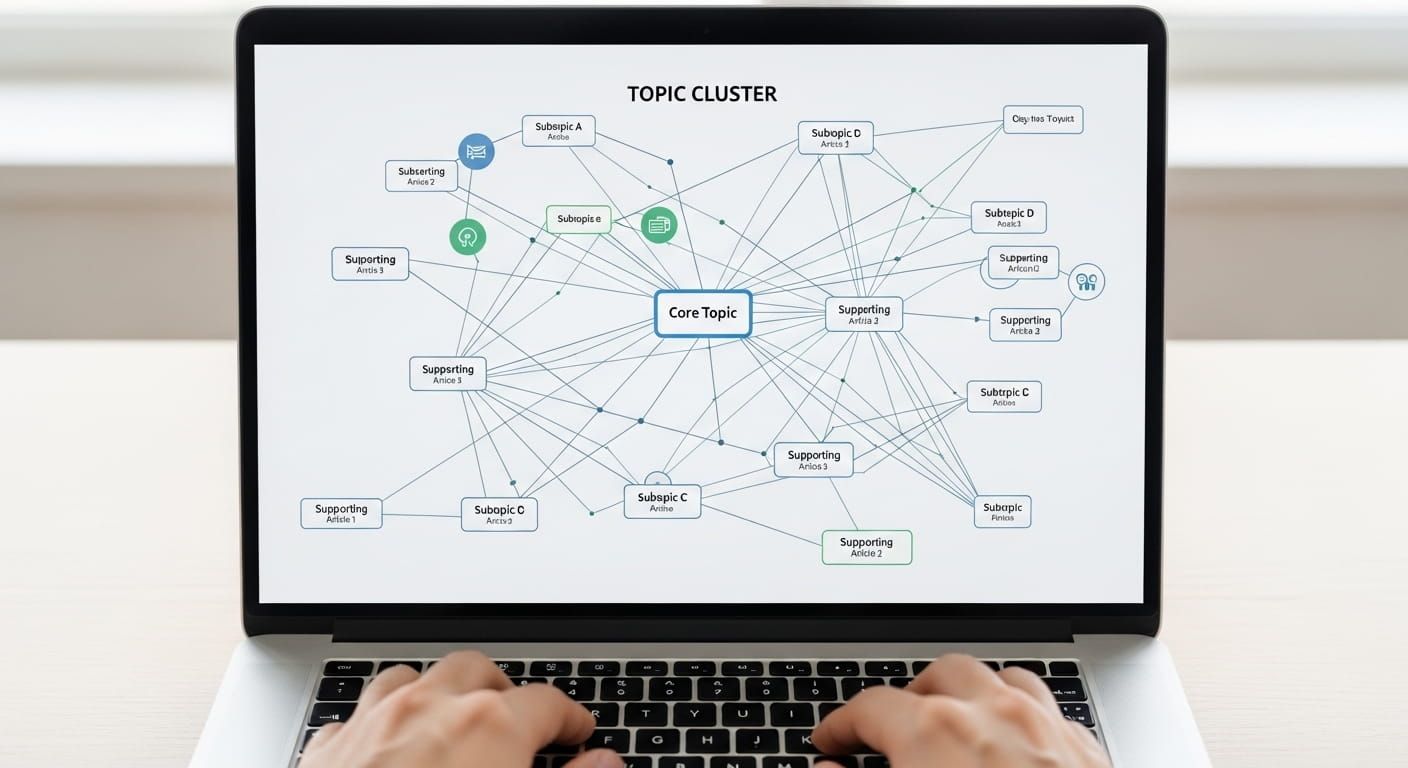
Topical authority is one of the most important concepts in modern SEO. It refers to how well your website covers a specific subject and how strongly search engines trust you as an expert in that area.
Search engines like Google Search no longer rank pages based on keywords alone. They use Natural Language Processing (NLP), Machine Learning, and entity-based systems like the Knowledge Graph to understand how deeply you cover a topic.
AI platforms such as ChatGPT, OpenAI systems, and Perplexity AI also prioritize content from sources that demonstrate authority across a subject.
This means ranking today is not about individual pages. It is about building a connected content ecosystem.
To understand how SEO works as a complete system, refer to the Ultimate SEO Guide .
What is Topical Authority in Simple Terms
Topical authority means becoming a trusted source for a specific subject by covering it in depth and connecting related topics.
Instead of creating isolated pages, you build a network of content around a central theme.
For example:
- A main topic (pillar page)
- Supporting topics (cluster pages)
- Interlinked content across related subjects
Search engines evaluate:
- How many related topics you cover
- How well your content answers queries
- How your pages are connected
Topical authority helps search engines understand that your website is a reliable source for that subject.
To understand how this connects to keyword strategy, refer to What is Keyword Research .
Why Topical Authority is Important
Topical authority directly influences rankings and visibility.
Search engines prioritize websites that:
- Cover topics comprehensively
- Provide consistent value
- Demonstrate expertise
This approach aligns with how search engines use entity relationships and semantic understanding.
Benefits of topical authority include:
- Higher rankings for multiple keywords
- Increased organic traffic
- Better visibility in AI-generated results
- Stronger brand credibility
Topical authority also improves your chances of appearing in featured snippets and answer engines.
How Topical Authority Works
Topical authority works by building connections between related topics and structuring content in a logical way.
Key components include:
- Topic clusters
- Internal linking
- Content depth
- Semantic relationships
Search engines use the Knowledge Graph to map relationships between entities. When your content is interconnected, it aligns with how search engines interpret information.
This makes it easier for search engines to:
- Understand your expertise
- Rank your content for multiple queries
- Recommend your content in AI-driven platforms
How to Build Topical Authority
Building topical authority requires a structured and consistent approach. It is not about creating random content. It is about covering a subject in depth and connecting related topics.
Key steps include:
- Identify Core Topics
Start with a primary subject that aligns with your business and audience.
- Create Pillar Content
Develop a comprehensive page that covers the main topic in detail.
- Build Supporting Cluster Content
Create multiple articles that cover subtopics related to the main subject.
- Connect Content Through Internal Linking
Link related pages to show relationships between topics.
- Maintain Consistency
Regular updates and new content strengthen authority over time.
Search engines like Google Search use entity mapping and the Knowledge Graph to understand these relationships. A well-structured content ecosystem improves visibility across multiple queries.

Topical Authority vs Traditional SEO
Traditional SEO focused on optimizing individual pages for specific keywords. Modern SEO focuses on building authority across topics.
Traditional SEO
Keyword-focused
Isolated pages
Limited topic coverage
Short-term results
Topical Authority SEO
Topic-focused
Interconnected content
Comprehensive coverage
Long-term growth
Search engines now prioritize websites that demonstrate expertise across a subject rather than single-page optimization.
This shift is driven by Natural Language Processing (NLP) and semantic search systems.
Role of Internal Linking in Topical Authority
Internal linking is one of the most important factors in building topical authority. It connects your content and helps search engines understand how different pages relate to each other.
It plays a key role in:
- Understanding relationships between pages
- Distributing authority across content
- Improving crawlability
For example, a page about topical authority should connect to related topics such as Semantic SEO Explained, Internal Linking Strategy for SEO, and What is Entity SEO .
These connections create a structured network of content, making it easier for search engines to interpret topics and evaluate your expertise.
AI-driven platforms also rely on these structured relationships when extracting and presenting information, which further strengthens your visibility across search and AI systems.
Common Mistakes in Building Topical Authority
Many businesses fail to build topical authority due to poor strategy.
Common mistakes include:
- Creating isolated content without connections
- Focusing only on high-volume keywords
- Ignoring internal linking
- Lack of depth in content
- Inconsistent publishing
These issues reduce your ability to establish authority.
Advanced Concepts in Topical Authority
Modern topical authority includes advanced strategies that align with AI-driven search.
- Entity-Based Content
Content should clearly define entities and their relationships.
- Semantic Optimization
Use context and related terms to improve understanding.
- Content Clustering
Group related topics into structured clusters.
- Content Refresh and Expansion
Update existing content to maintain relevance.
Search engines use Machine Learning to continuously refine how authority is evaluated.
Websites that adapt to these systems gain a competitive advantage.
Topical Authority and AI Search
Topical authority plays a critical role in AI-driven search platforms.
Systems like ChatGPT, OpenAI models, and Perplexity AI prioritize content from sources that demonstrate expertise across topics.
Strong topical authority helps:
- Improve visibility in AI-generated answers
- Increase trust and credibility
- Strengthen entity relationships
SEO is no longer limited to ranking pages. It is about becoming a trusted source within a subject.
Conclusion
Topical authority is the foundation of modern SEO. It shifts the focus from individual pages to building a complete content ecosystem.
Search engines now prioritize depth, relevance, and structured relationships between topics. Businesses that invest in topical authority achieve stronger rankings, better visibility, and long-term growth.
"Authority grows when your content connects, not when it stands alone."